
Saskia Van Vactor
Ceramics & Prints
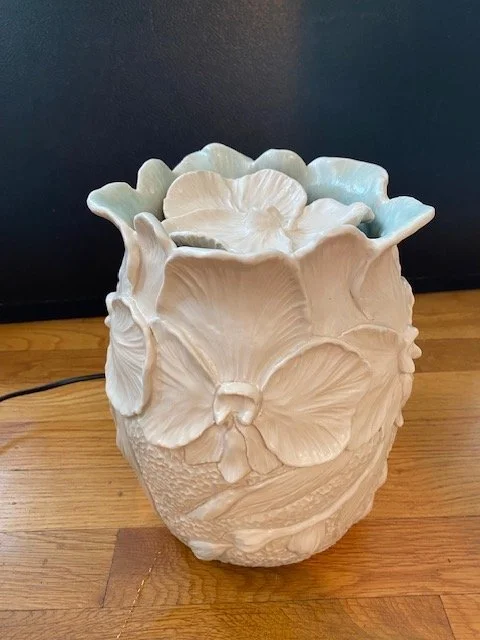
Seed Pots
Lucenea Studios
About my seed pots
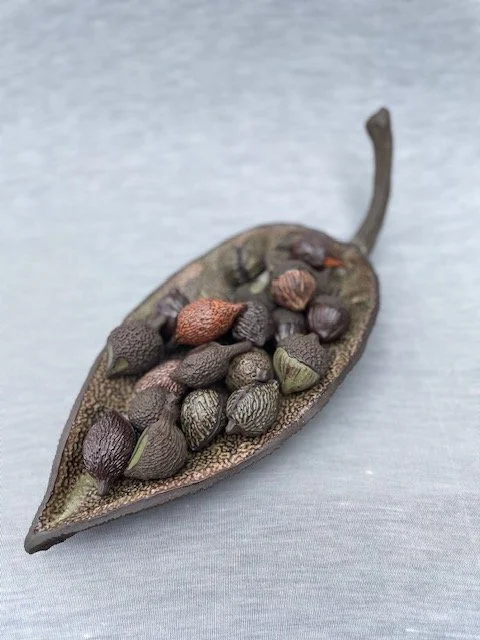
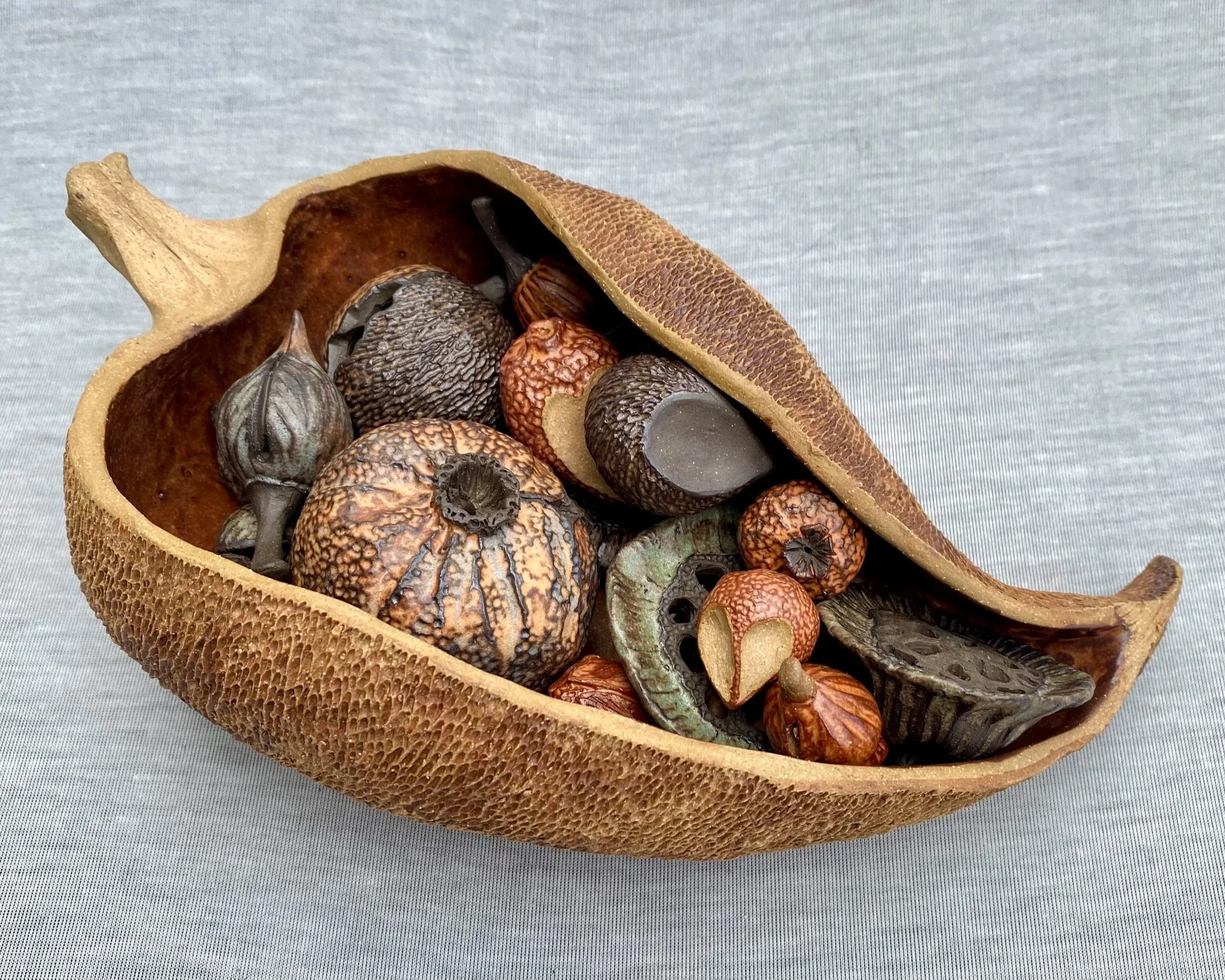
The idea of creating seed pots was inspired by the traditional Acoma seed pots of New Mexico. My shapes are inspired by nature.
An Acoman potter told the story of how traditional seed pots were created to hold the seeds for spring planting. Each was pinch pot formed and the belly expanded by blowing into it. The breath blown into it also contained a wish for the harvest. As these pots became more symbolic and the painted designs more intricate, the wishes grew more expansive to include the whole community.
I fell in love with this idea.
Each of my seed pots contains a wish as well, one close and dear to my heart. With every breath blown in to expand the tiny belly of each pot I add a wish to protect our amazing and breathtaking environment, our parks, trees, rivers, cliffs, oceans, forests, mountains and endless rolling plains.
Though I am one quarter Native American, I was not born or raised with their traditions, rituals or cultures, so although I love the traditional seed pots, I needed to create my own version of these wonderful vessels to express something unique. I looked to nature, as I always do for inspiration and that is where the idea of creating them in seed-like forms came from. I am always amazed how sculptural nature’s seeds are. My seed pots take that hidden beauty held within the traditional pots, the seeds themselves, and expresses it on the outside. Like seeds, I see these little vessels as symbols of fertility and growth, from the tiny acorn comes the magnificent oak.
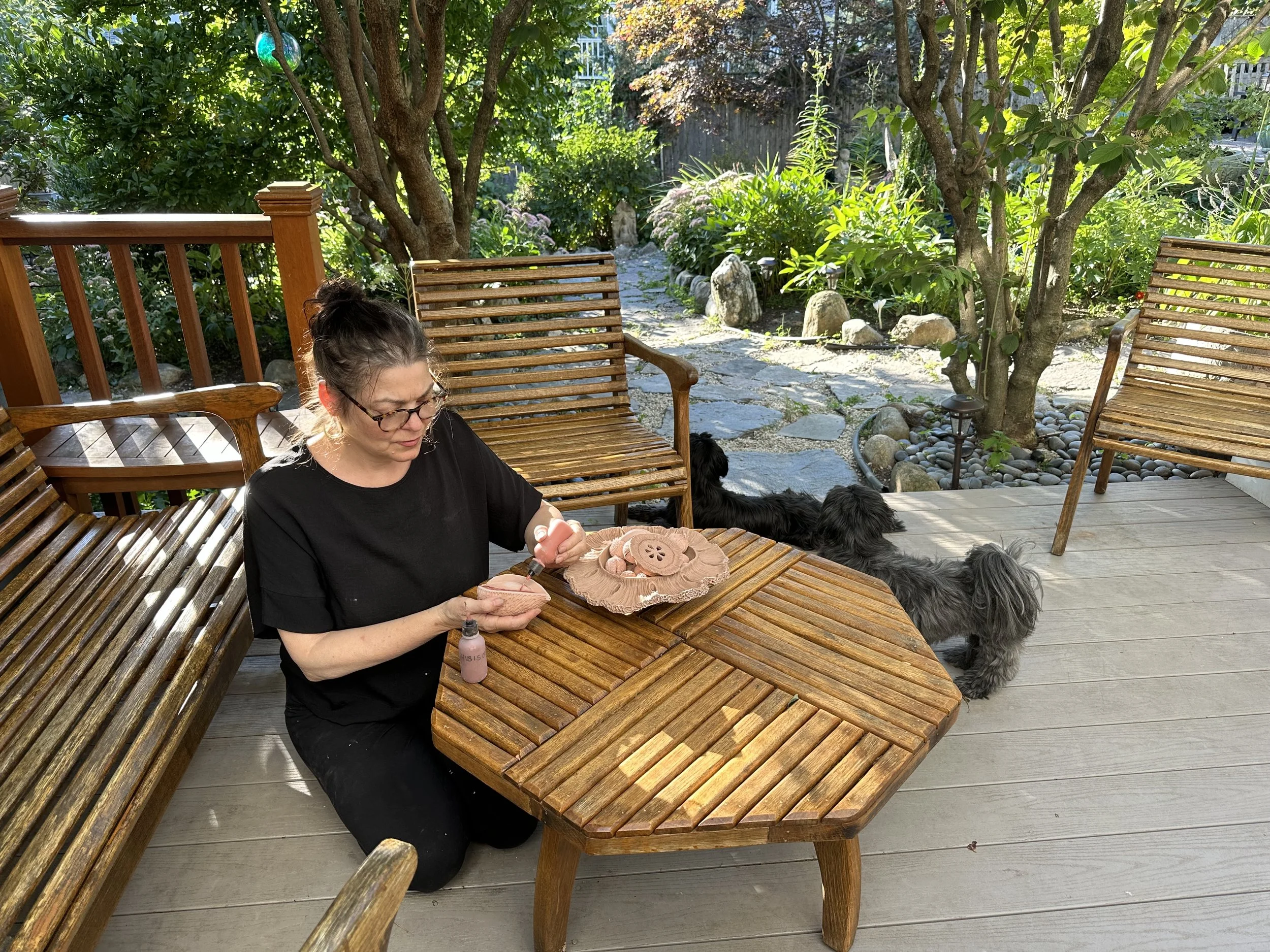
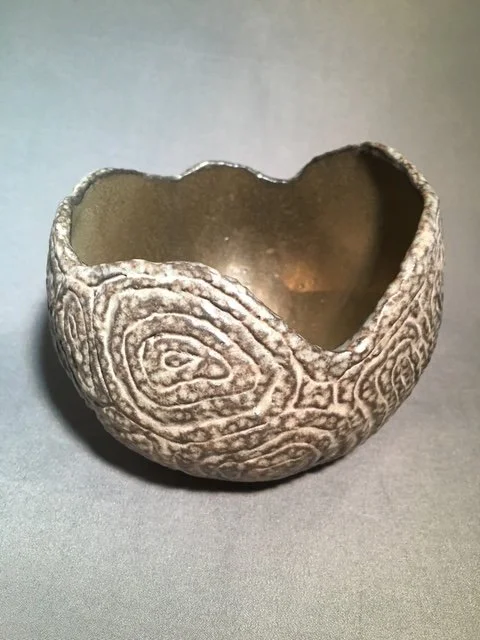
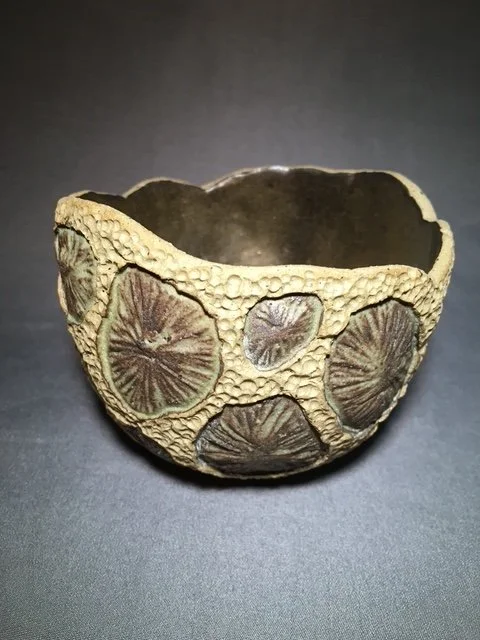
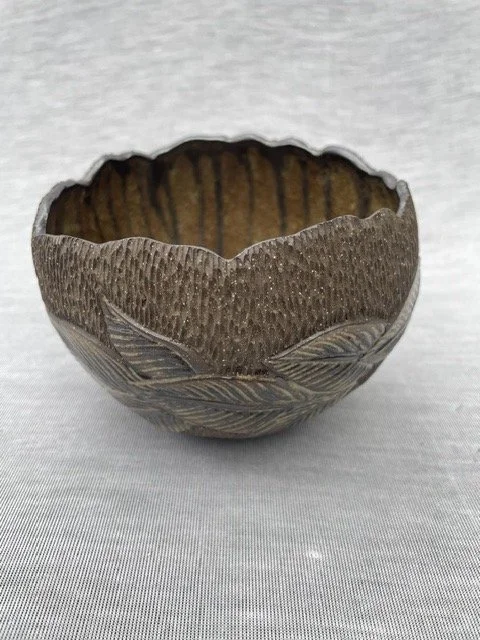
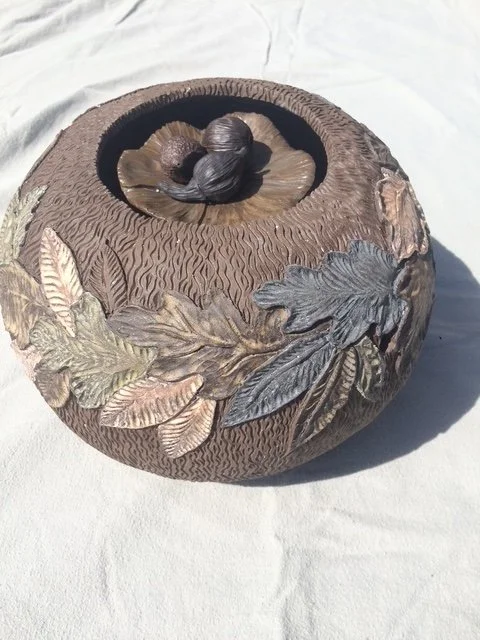
I have recently begun creating little bowls to hold small collections of seed pots. I see them in small clusters. And I usually make them in small clusters as well.
Similar to the Acoma pots, each piece is an original handmade vessel formed through the pinch pot method. As they harden, necks are attached and each surface is sculpted, carved and textured. My clays vary as do the final finishes. Many of these pots are painted with terra sigillata and then hand buffed, giving them a soft and natural feel. Others are partially glazed while some are left completely unglazed revealing the natural beauty of the clay itself.
Saskia G. Van Vactor
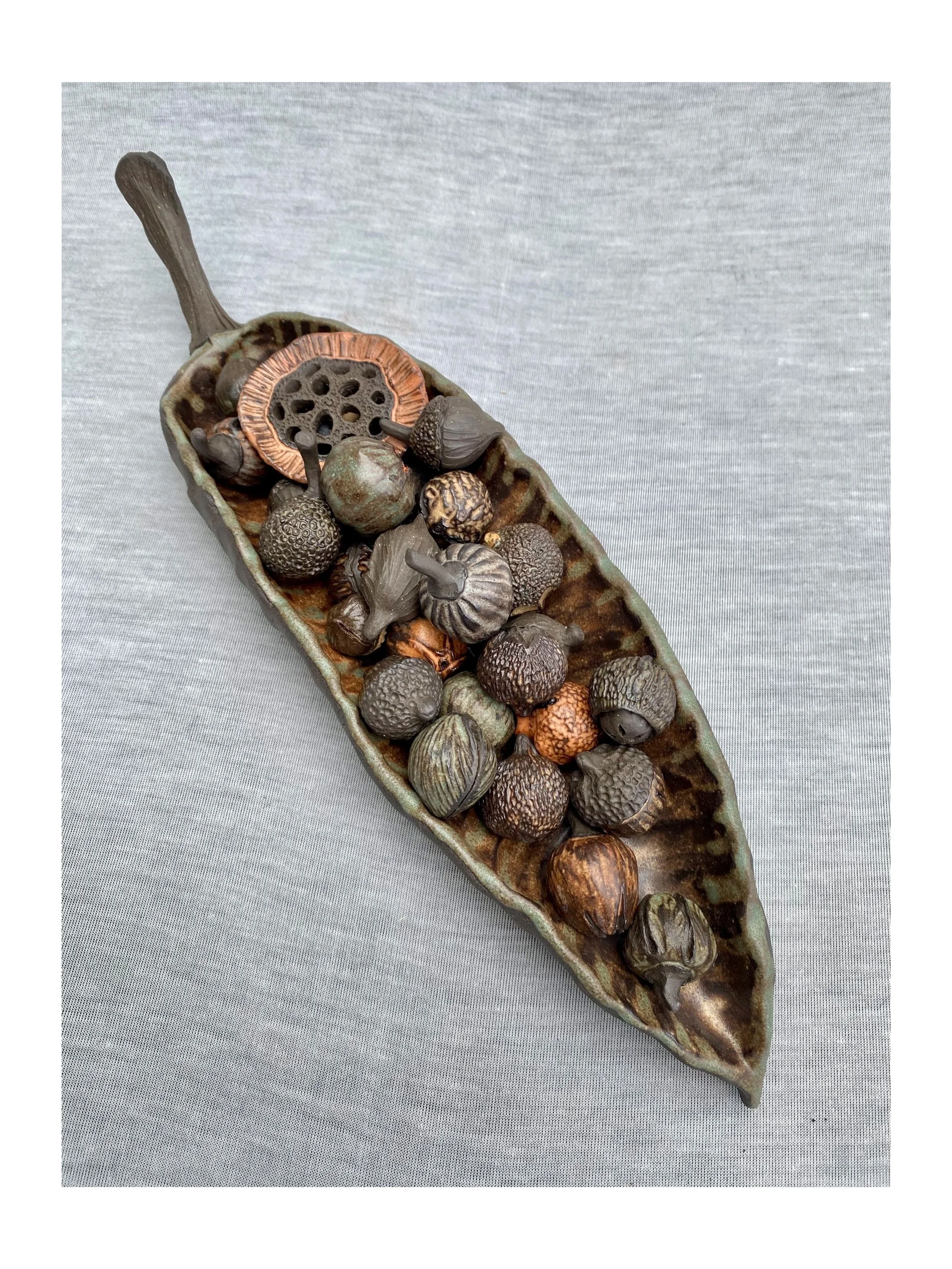
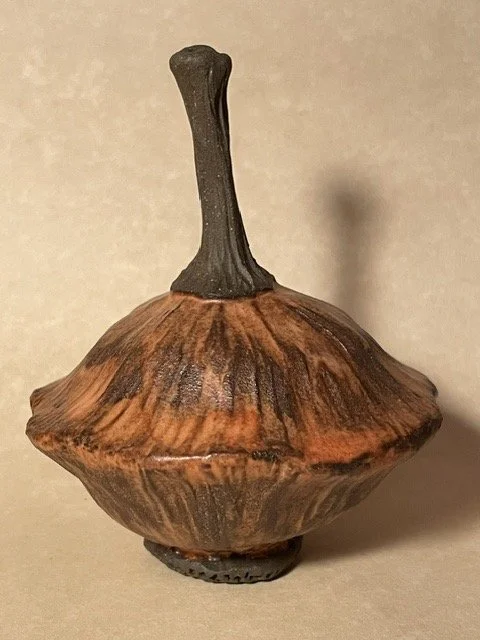
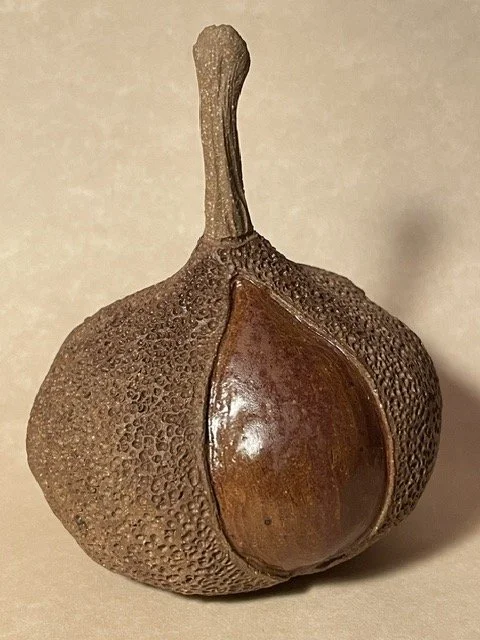
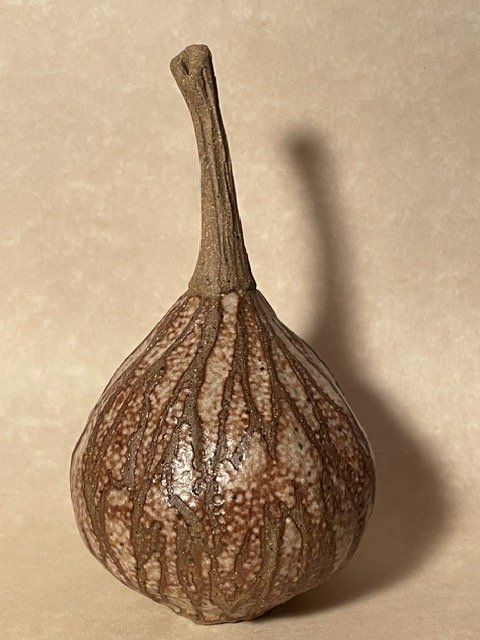
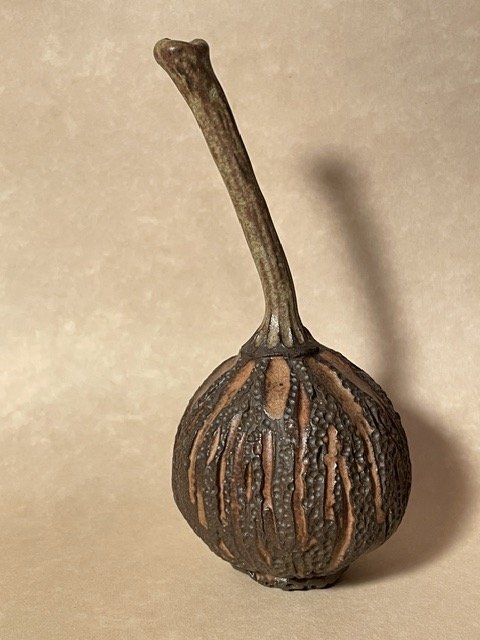
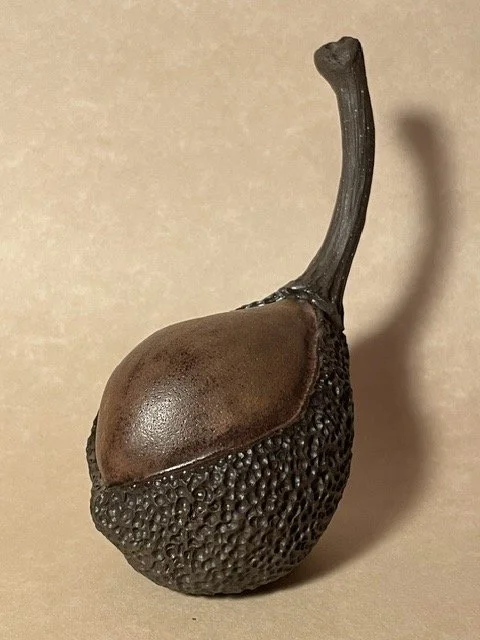
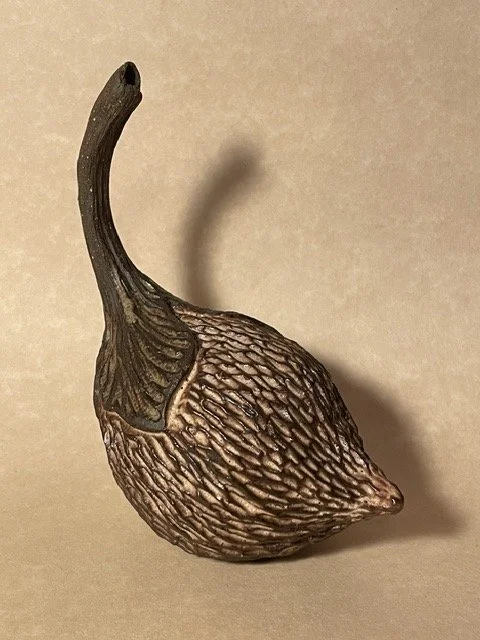
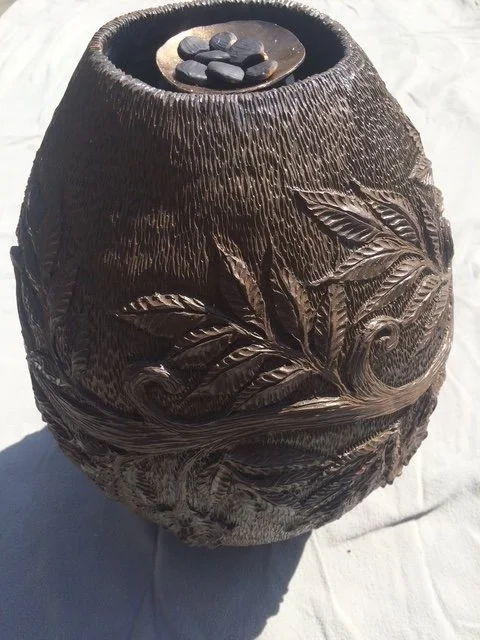
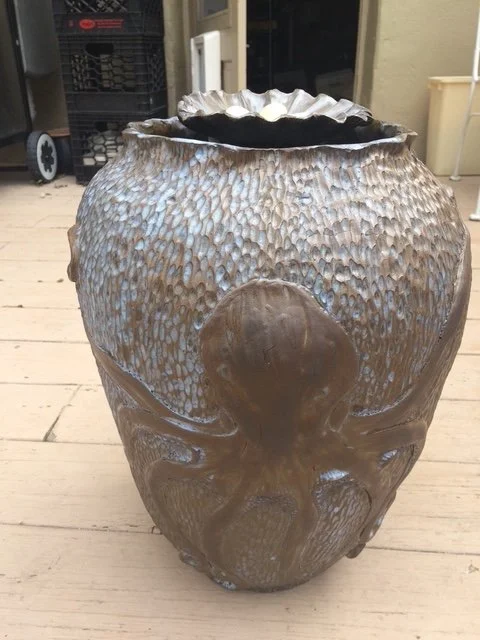
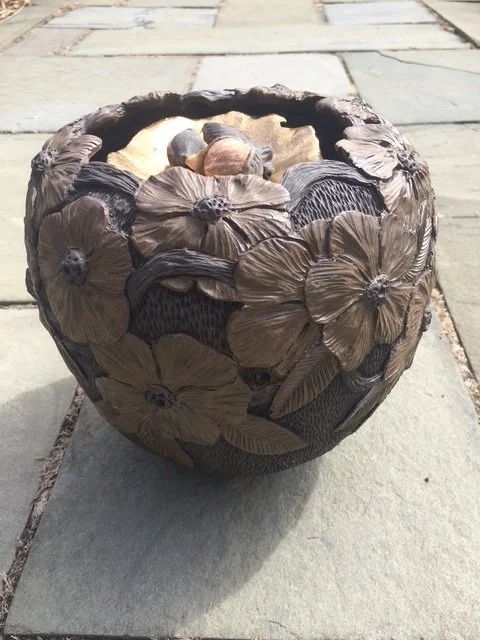
Large forms inspired by shapes, colors, and textures found in the natural world.
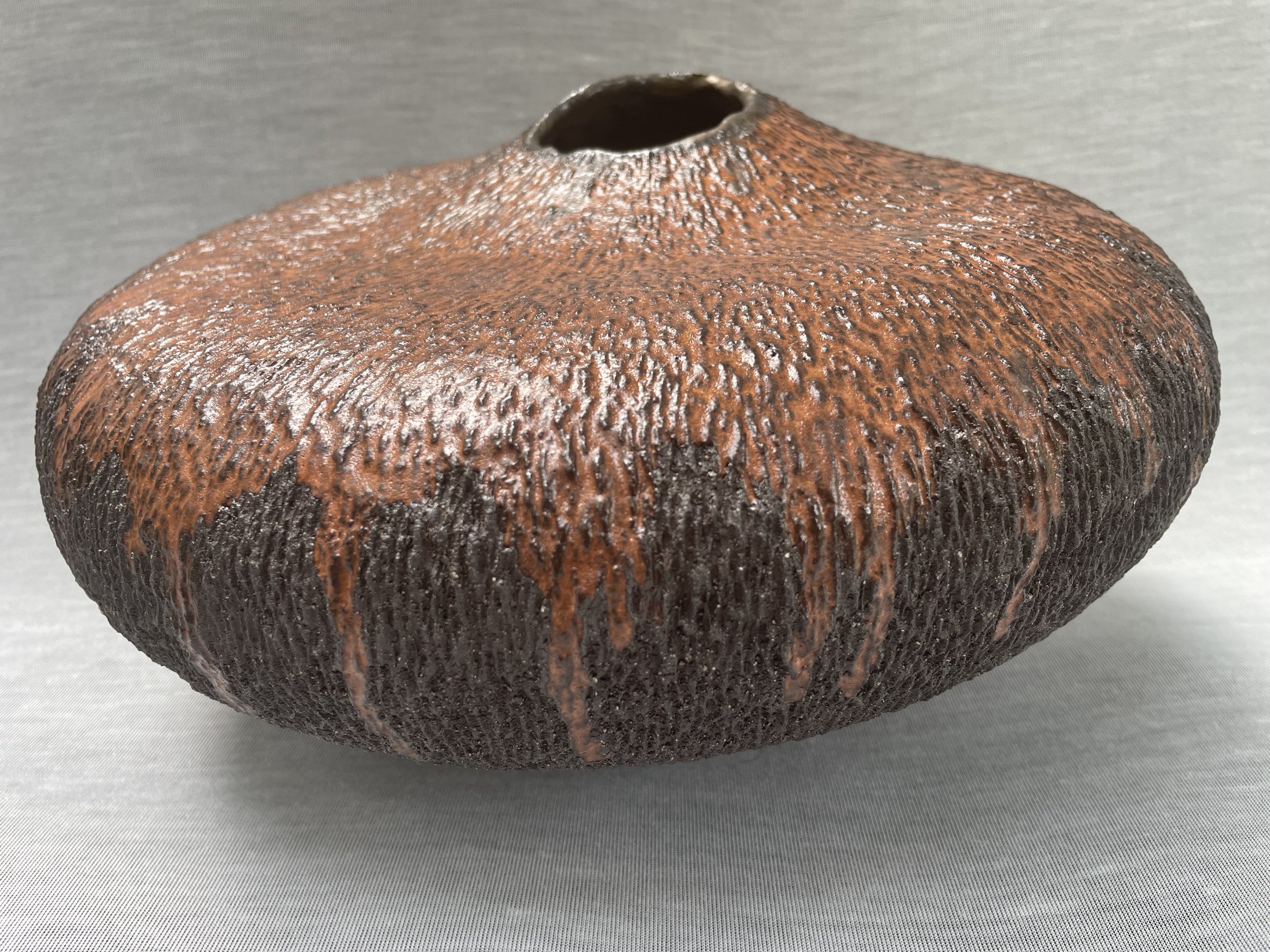
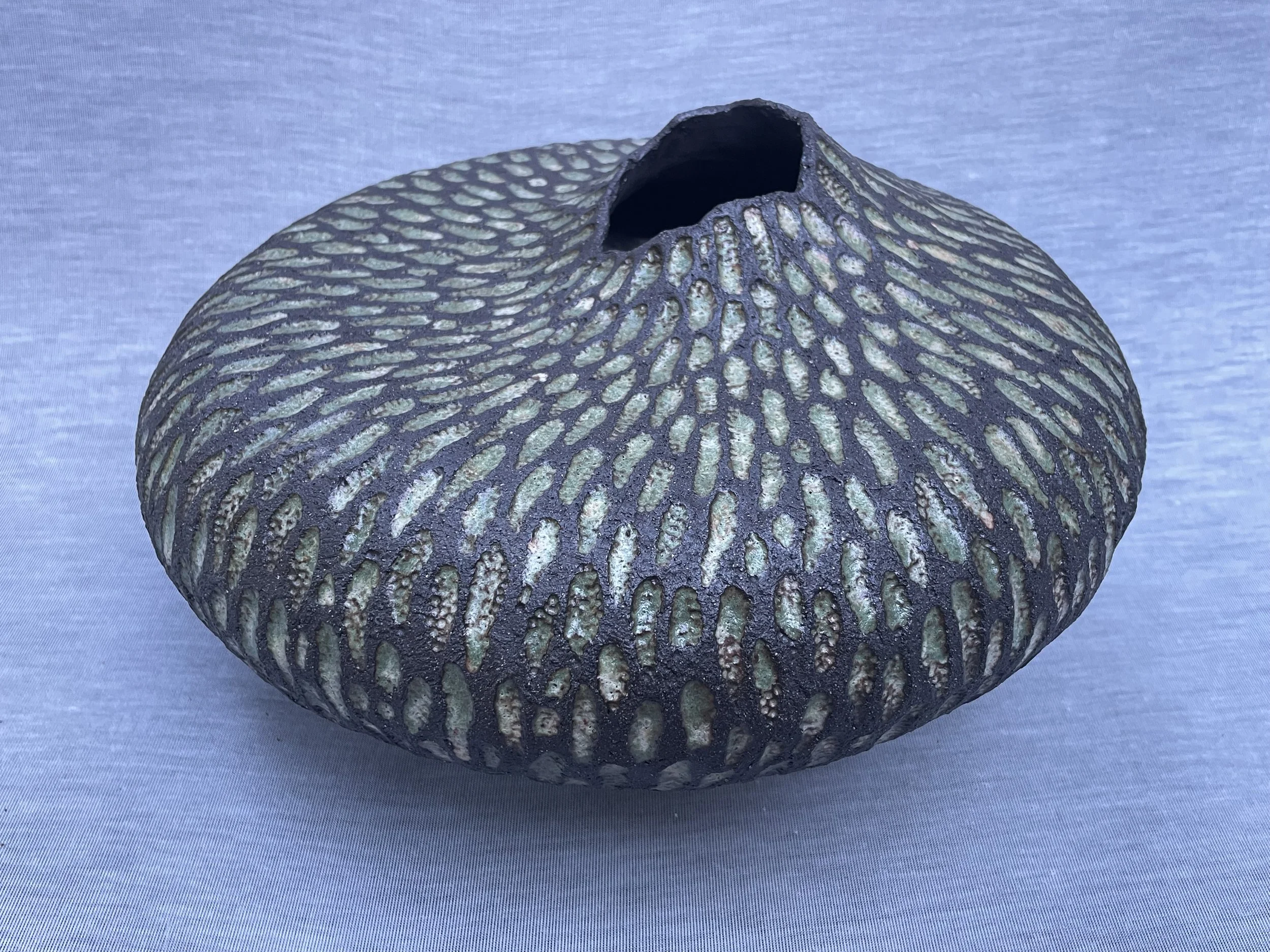
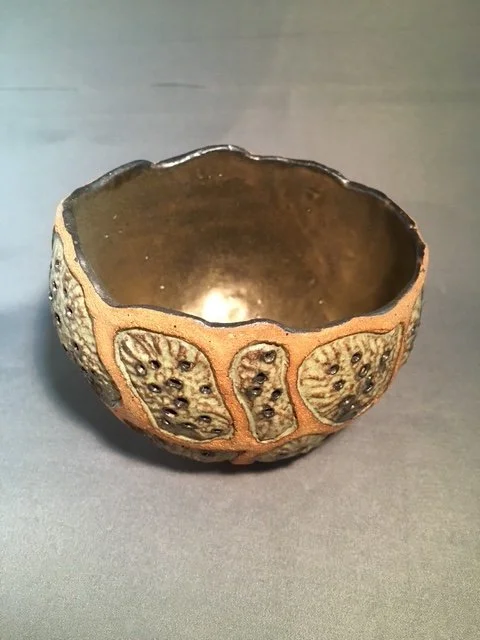
Bowls
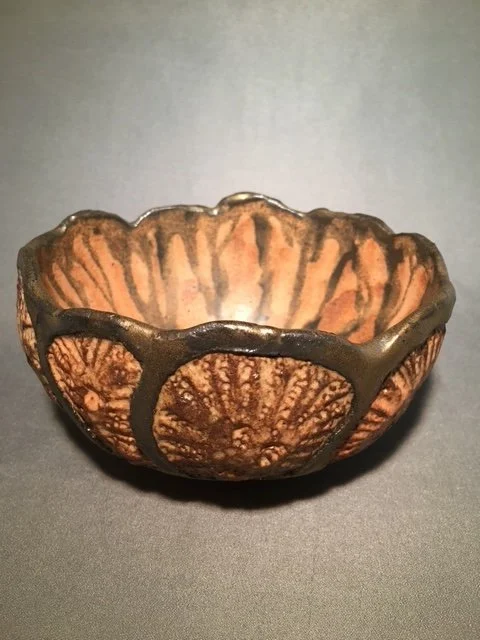
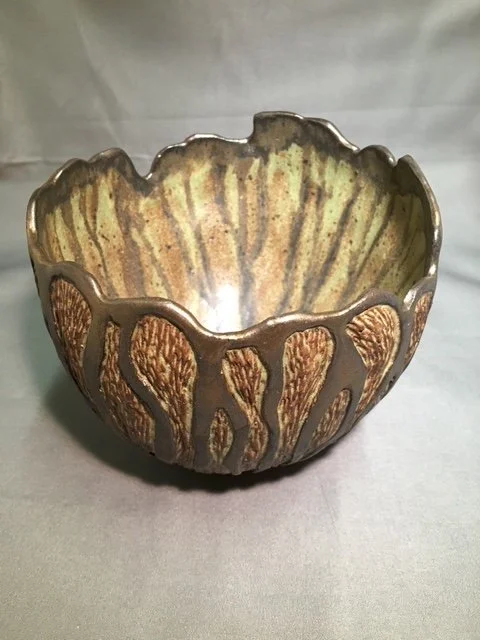
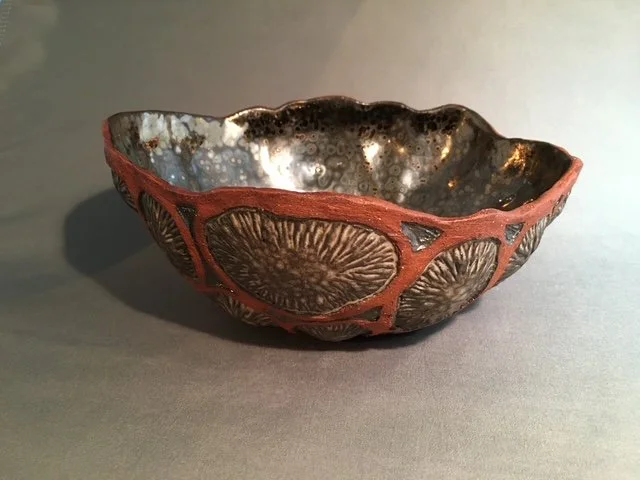
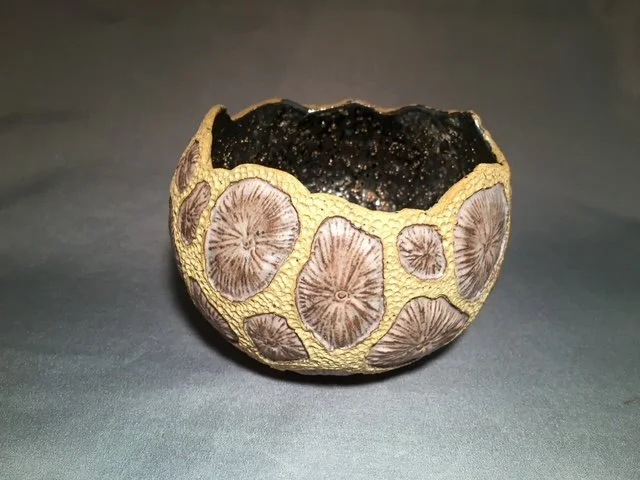
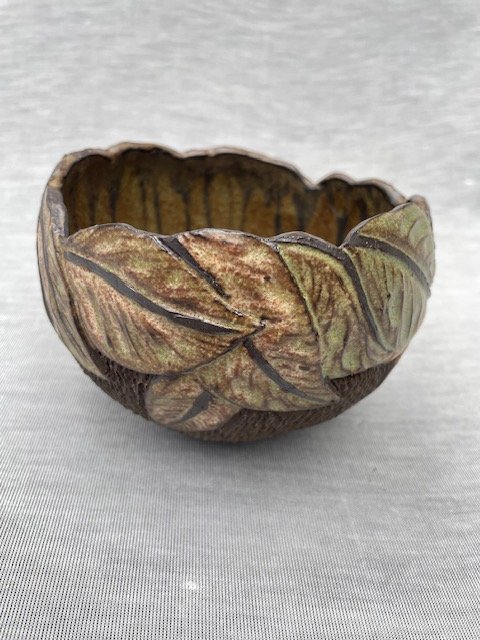
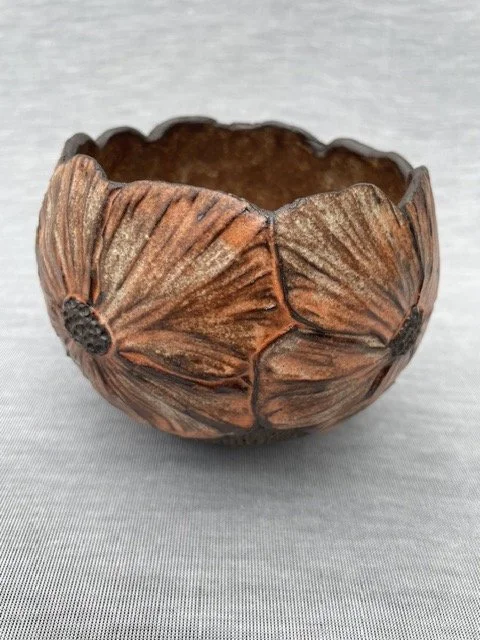
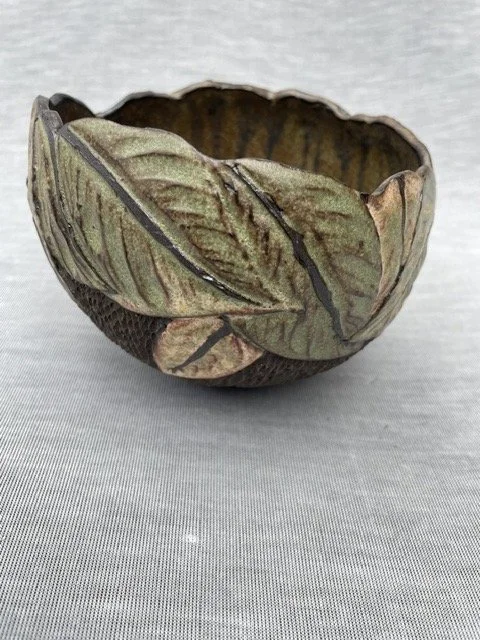
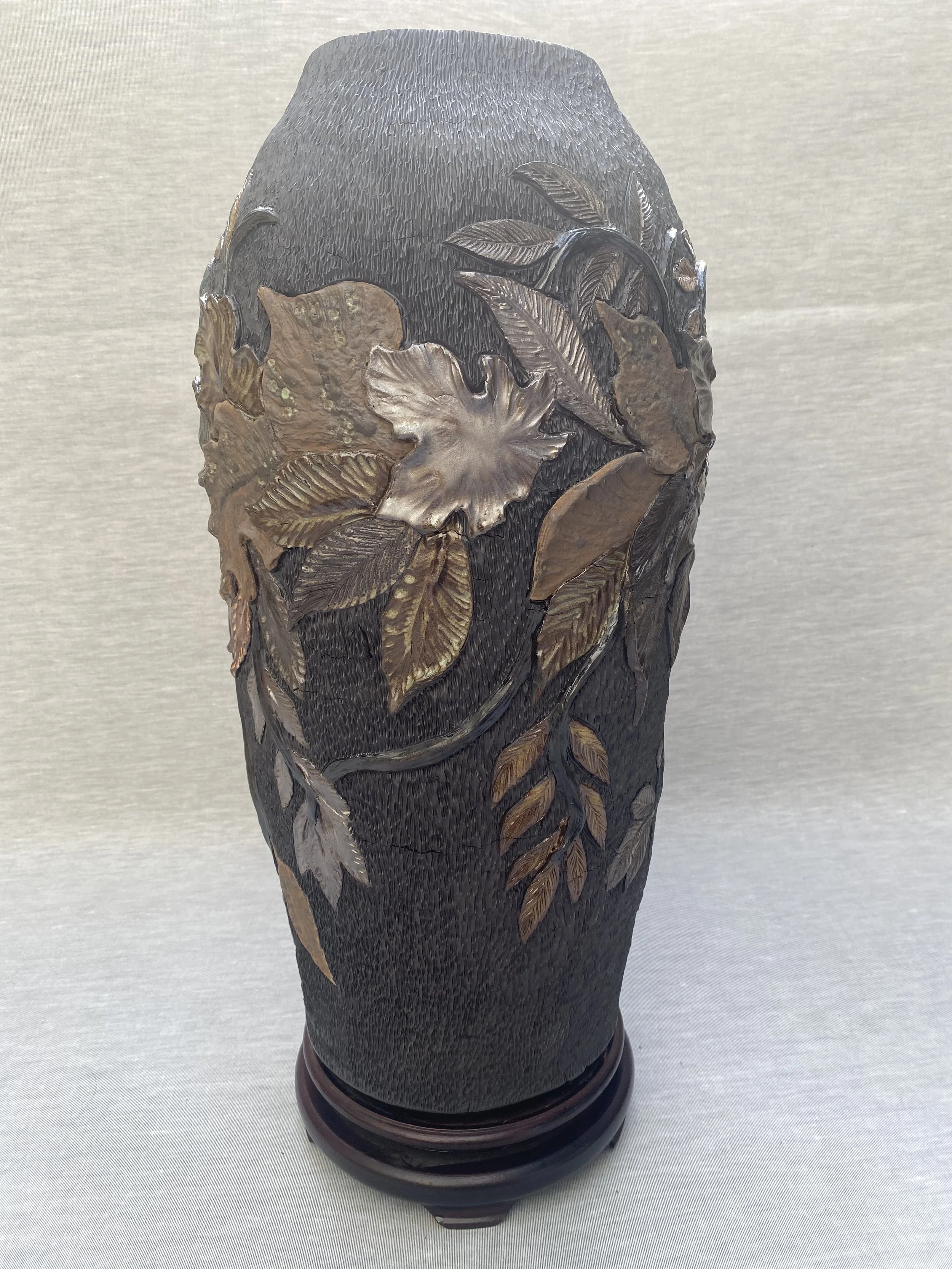
Large hand coiled and carved urn.
27 inches in height
Fountains: Custom Made
Printing Projects
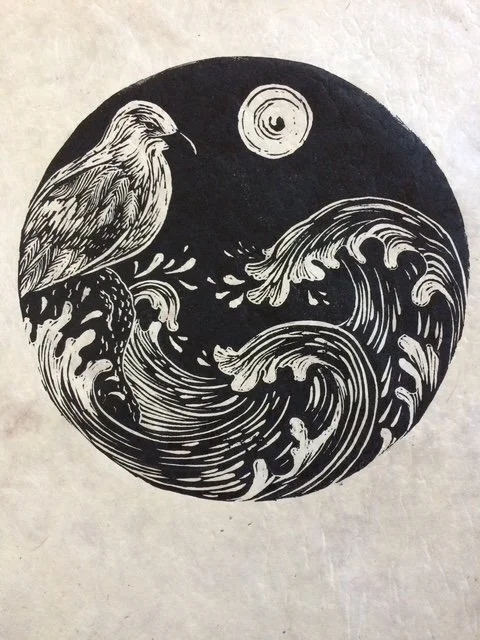
About my linoleum prints
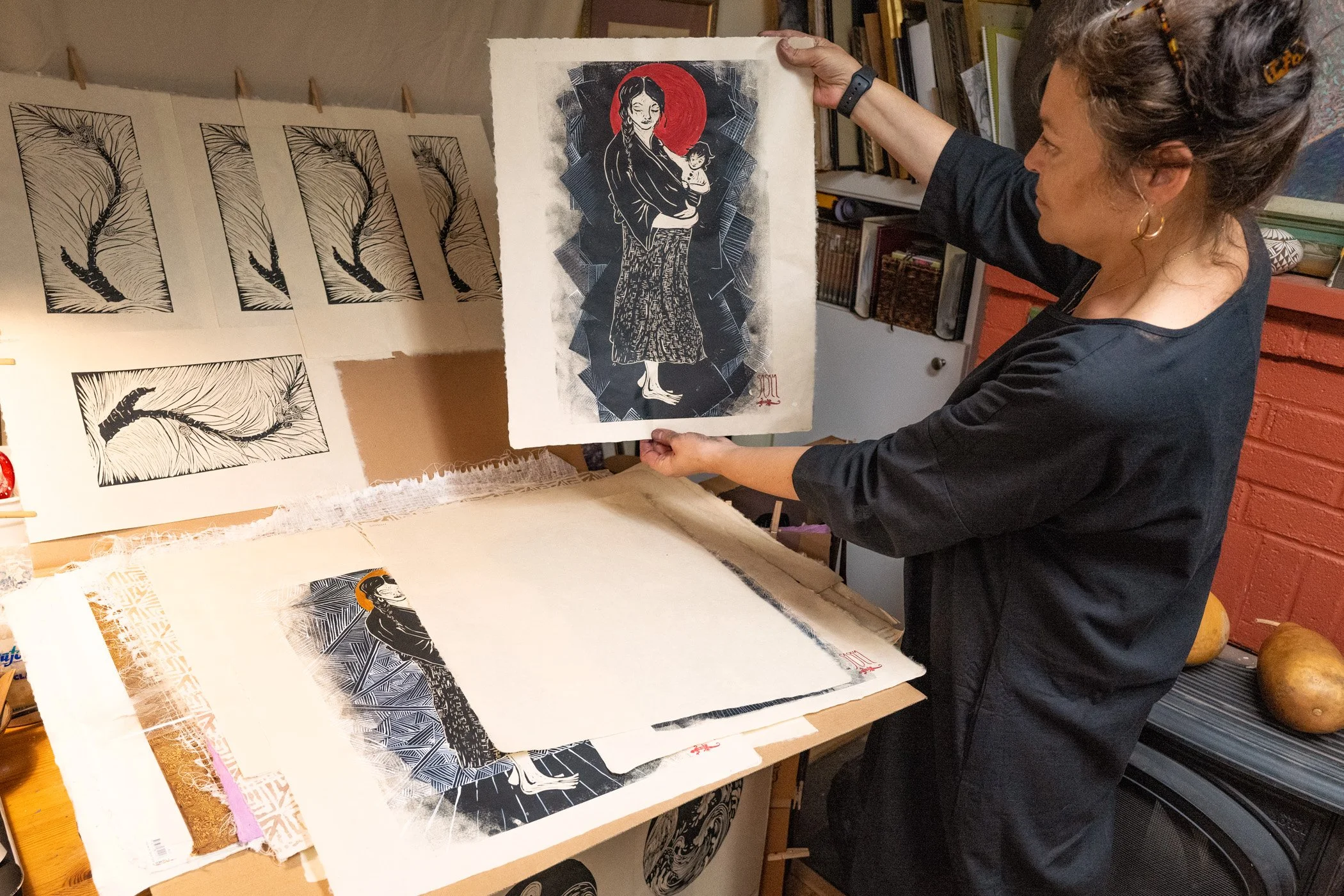
Since my years as a Graduate Student in Art at Kansas State University, studying ceramics with Professor Yoshiro Ikeda, I also discovered the wonderful world of printmaking! As a child, Thomas Hart Benton was a sort of Grandfather figure for me and my siblings. I grew up surrounded by his lithographs, which are a part of my internal art library. After enrolling at Kansas State University I was delighted to meet Professor James Munce, an amazing artist, printmaker and teacher. With his guidance I explored many printmaking techniques, with a focus on lithography.
After graduating and losing the use of the printmaking studio my focus turned mainly towards ceramics.
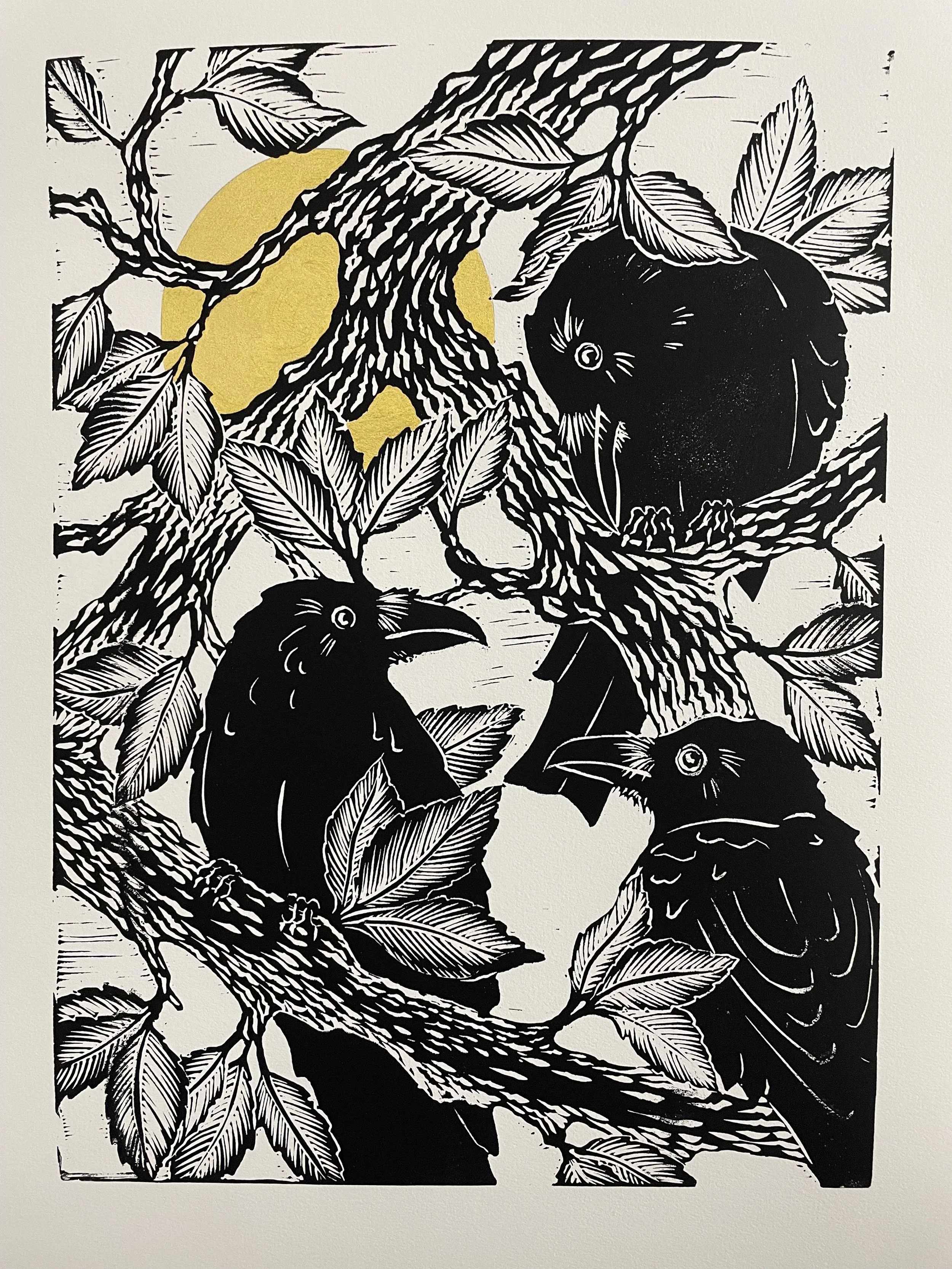
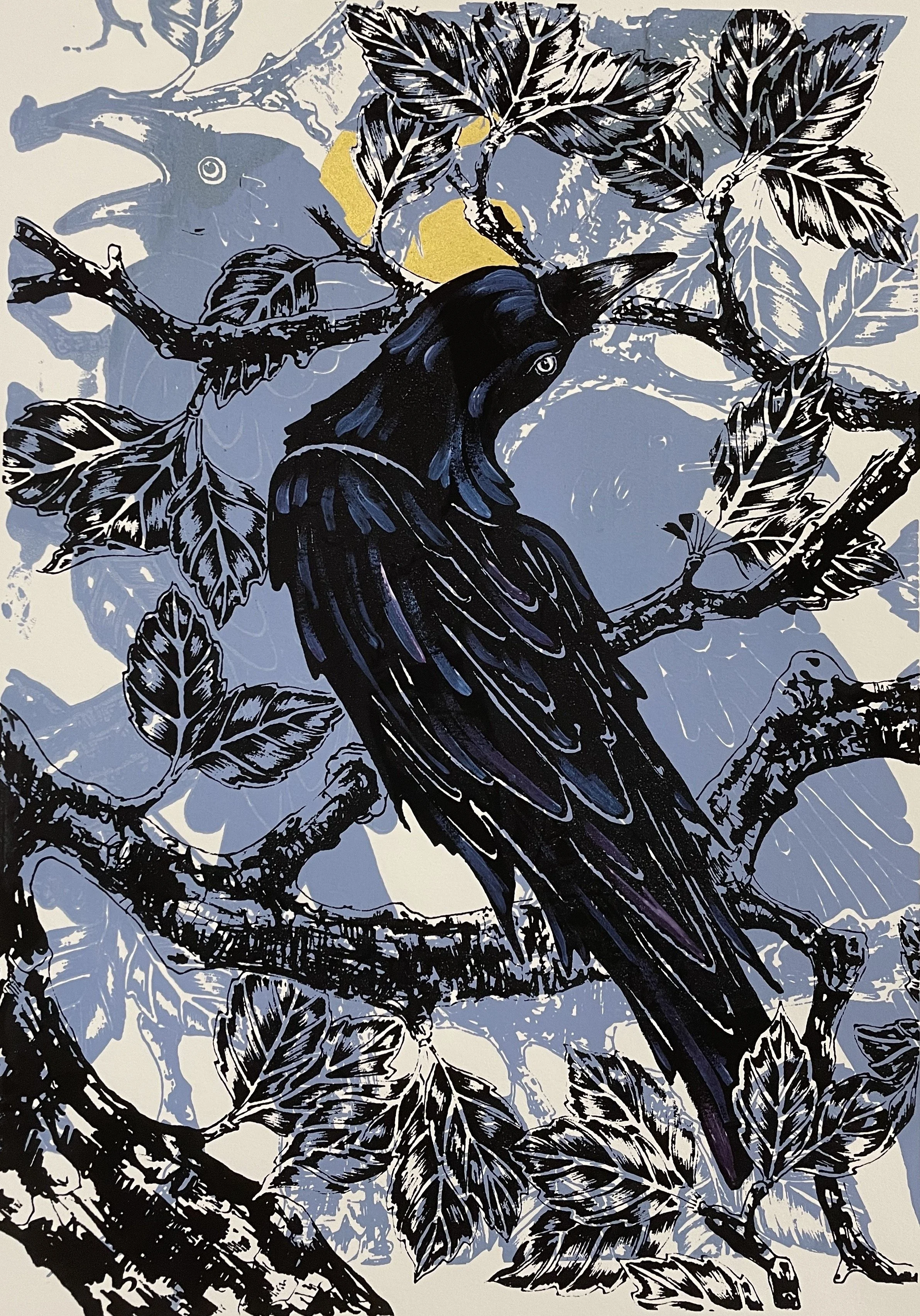
Recently, having spent many summers in Okinawa, Japan, I re-discovered my passion for printmaking. Inspired by the Japanese scenery and traditional woodblock printing, particularly the prints of Katsushika Hokusai, I began a series of my own linoleum prints, which I could do at home! The images for these, like my pottery, are inspired by nature. Carving the surfaces is very much like carving the surfaces of my pottery with the additional and wonderful opportunity to explore the world of paper. I print on a variety of natural papers, also initially inspired by the amazing paper options I discovered in Japan. The textures, color variations, and weight of the papers I use bring something unique and rich to each print.
I am currently working in the Shepheard and Maudsleigh Printmaking Studio in West Newton which has opened many doors and printmaking opportunities through the community of members, workshops, and equipment. It has been an exciting time for me.
Through printmaking I have also discovered a means to voice concerns, tells stories that need being told, explore and share topics of social justice.
Tree of Life Series
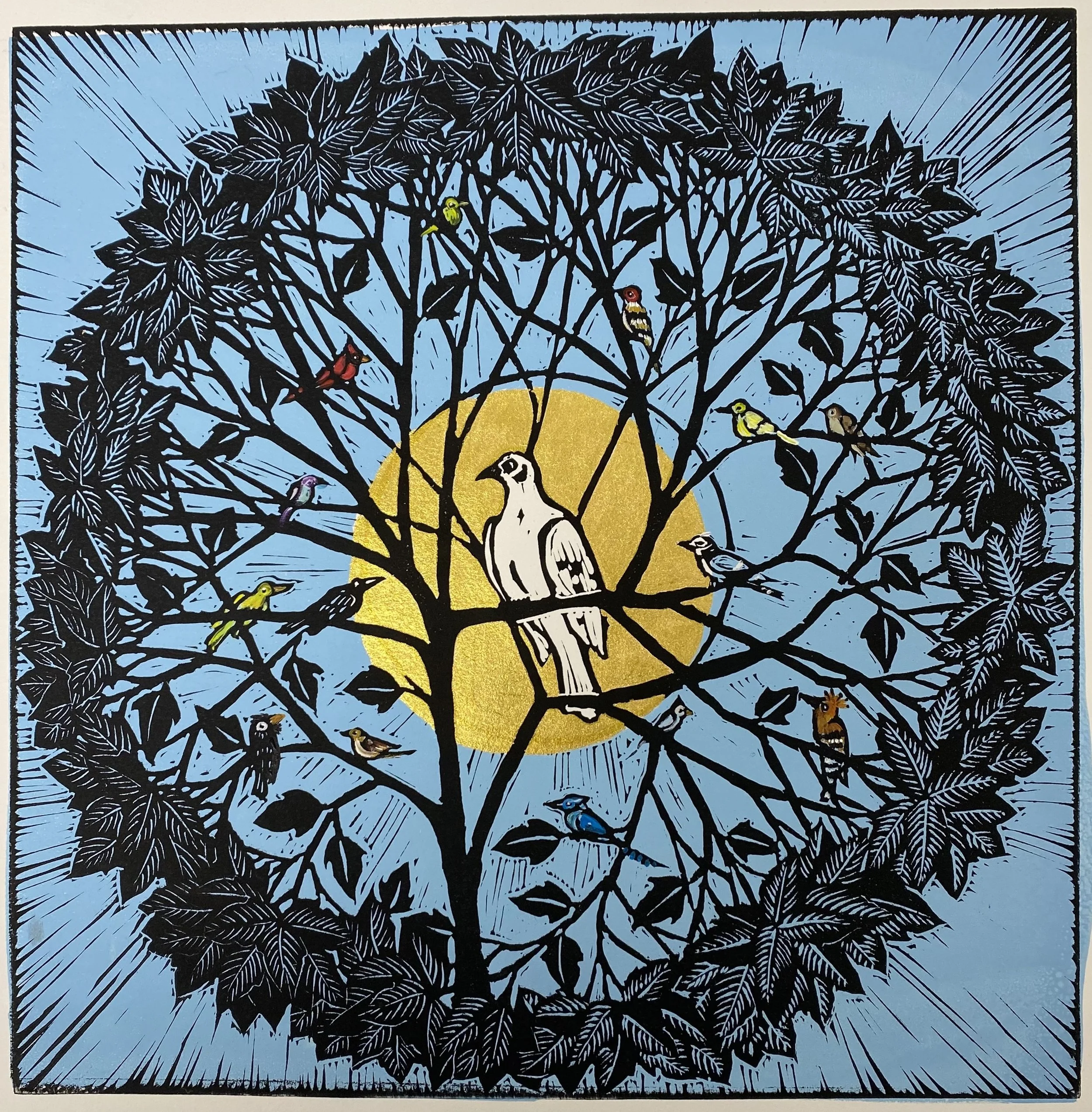
My Tree of Life Series
Reflecting on each previous year and finding a silver lining….
In January 2022 I created a block print of a Tree of Life. I made it reflecting on the year that had just ended, 2021, the deaths from COVID, a search for balance, nests to signify rebirth….
The following January I returned to this idea, reflecting on 2022. As a teacher we were back in the classroom and everything was going back to normal… or so we thought. The rings represent the focus it took to find or create a stillness and center for our students, friends, family. The cardinal is again present to represent and remember those we lost.
Reflecting on 2023 I created a community of birds both local and those from war torn countries…with a dove to represent the hope for peace.
Reflecting on 2024, the world, or at least the US, felt divided and torn apart through political and moral views, to the devastation caused by wildfires. There is a Japanese art form called kinsugi, where a broken ceramic vessel is mended with gold. The idea is to not to hide the fracture nor only restore an object to its original state, but to celebrate its history and find beauty in its imperfections, that perhaps the mended break makes it more beautiful by revealing its journey. With this in mind, my tree for this year is torn and mended with gold.
Reflecting on 2025, that was a difficult one, in fact each year feels a bit more difficult to find the gold lining….. My tree for this reflection is a winter tree, bare of leaves, branches broken, birds in cages…..and in amongst the roots are words that were red flagged by our government….words that were taking root to create change, words that were giving voice to minority communities, words to identify with, words that would make a grant un fundable. I belief and hope is that these words remain embedded in our roots and will continue to sprout.
Featured Products
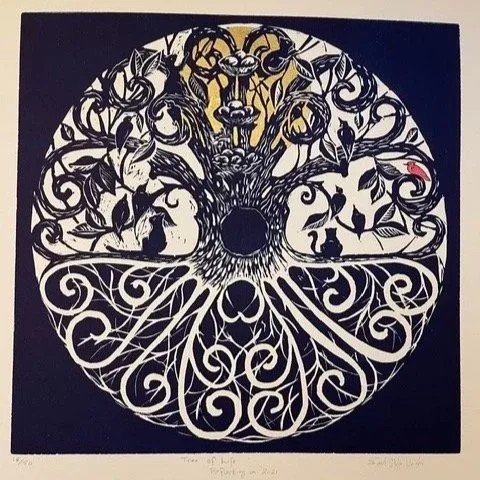
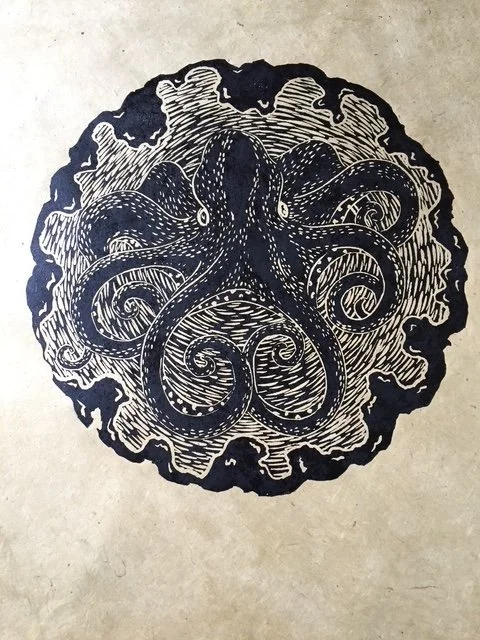
Hand carved Lino print, hand painted details, hand printed on Rives BFK . Limited Edition
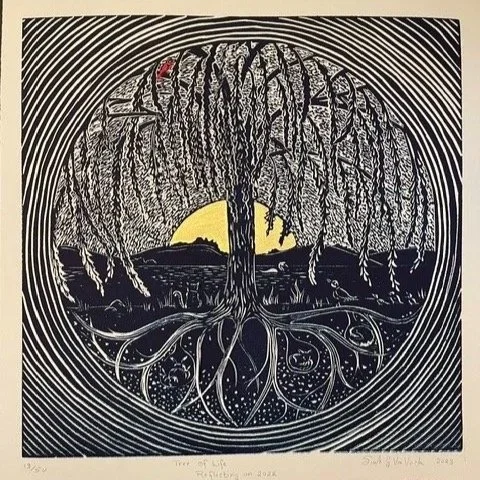
Hand carved Lino cut with hand painted details. Hand printed on Rives BFK. Limited Edition
Hand carved Lino print with hand painted details. Hand printed on Rives BFK. Limited Edition
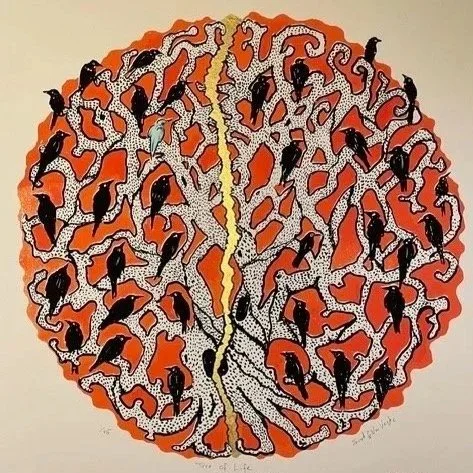
Hand carved Lino print with hand painted details. Hand printed on Rives BFK Limited edition
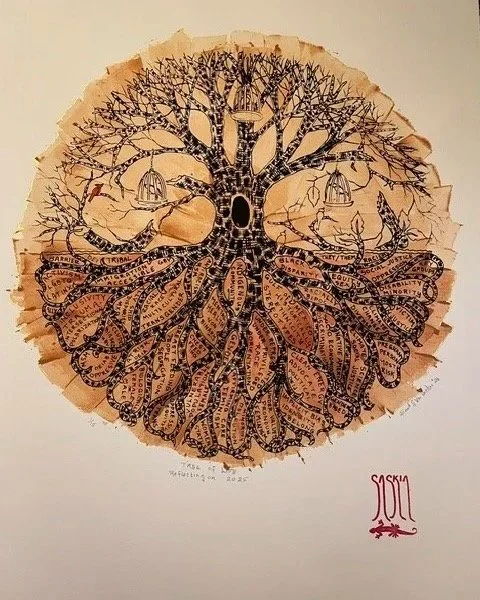
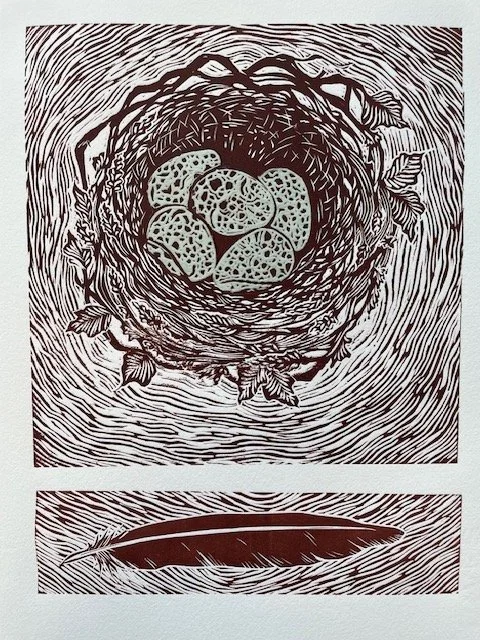
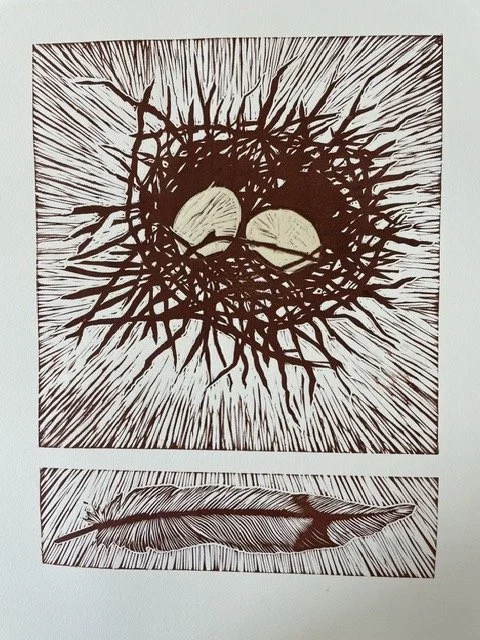
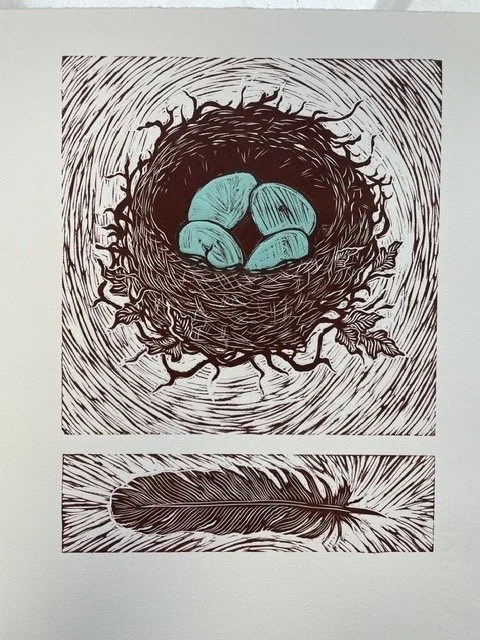
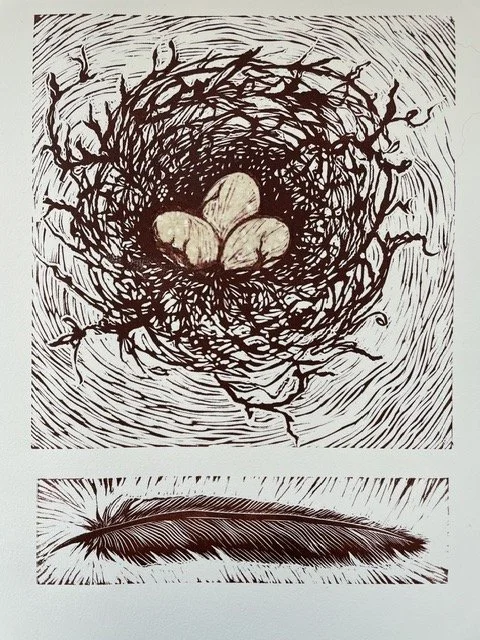
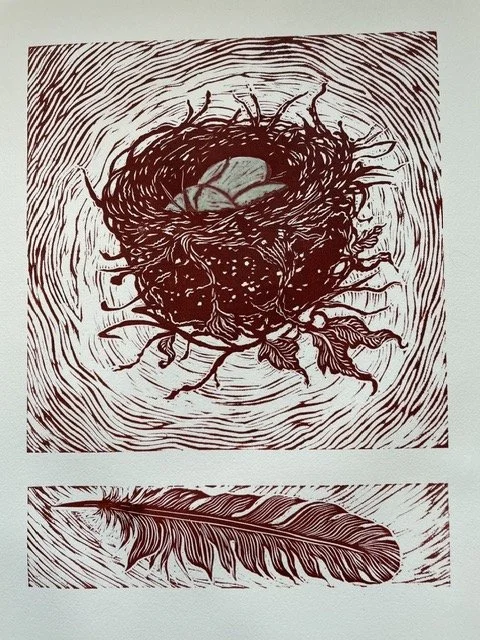
Nests in Lino Cut with cine colle
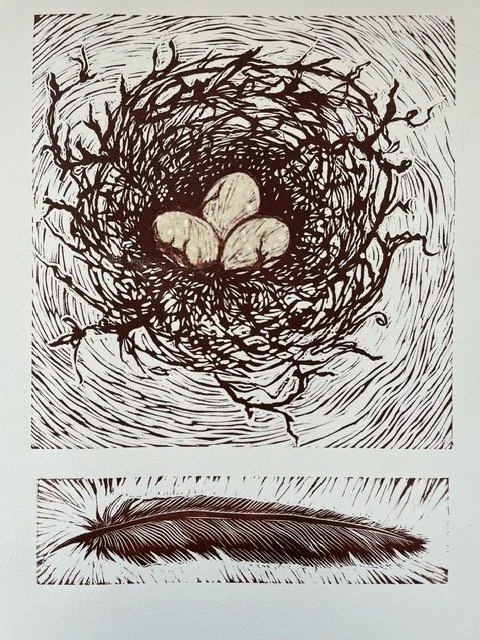
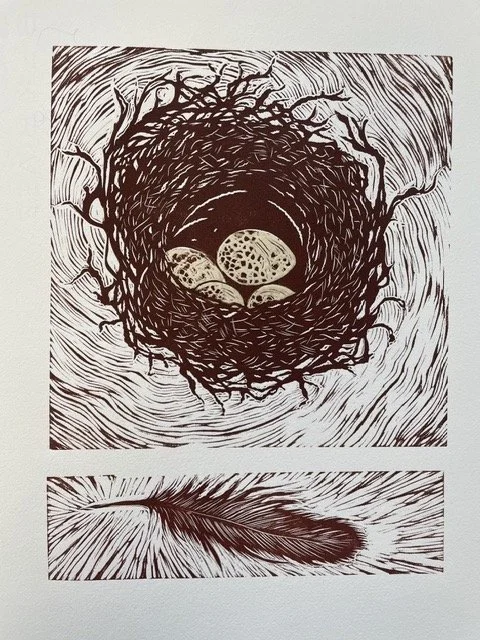
This is a new series, started Spring 2026. Why nests? Spring, of course, but I have always been drawn to smooth roundish shapes, stones, eggs, seeds…when I am feeling distresse, stressed, or anxious, I have two stones I hod, focusing on them their smoothness, coolness, how they fit in my hand. I imagine the craziness surrounding them and focus on their stillness. This helps me. This spring I was looking at a nest, noticing the stillness of the eggs amongst the nesting materials, tree twigs and leaves rocking back and forth in the wind blown tree… that stillness again was healing. As I looked at more nests I began to see how differently bird types created their safe spaces.
My nests are Lino cut with a new technique called cine colle added to help the little eggs stand out.
Awareness around Indigenous Women and Children
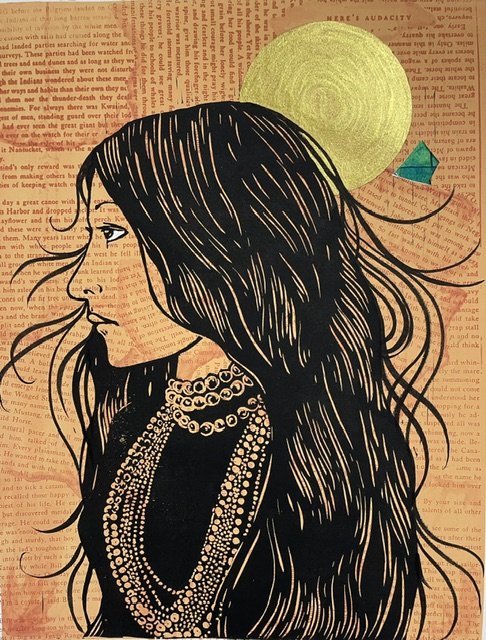
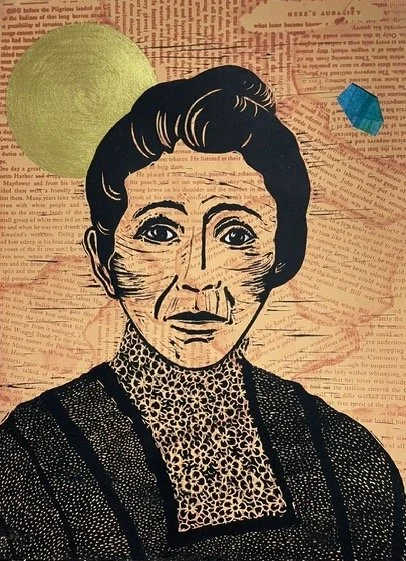
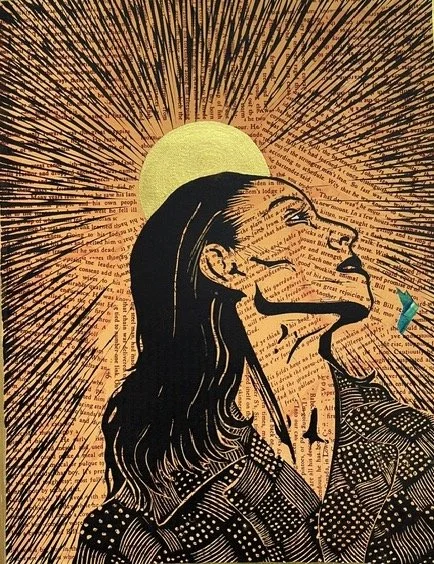
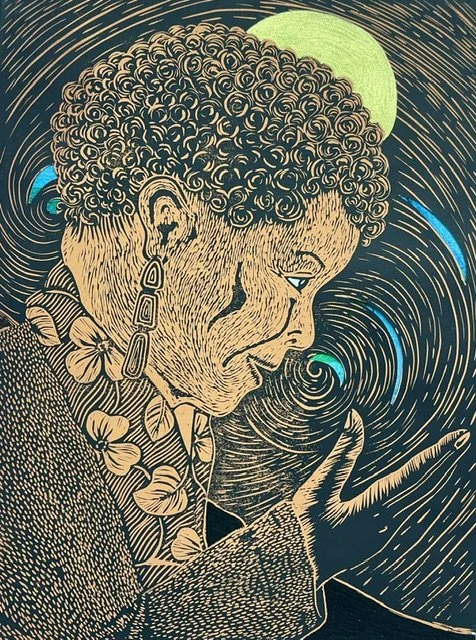
Here’s Audacity
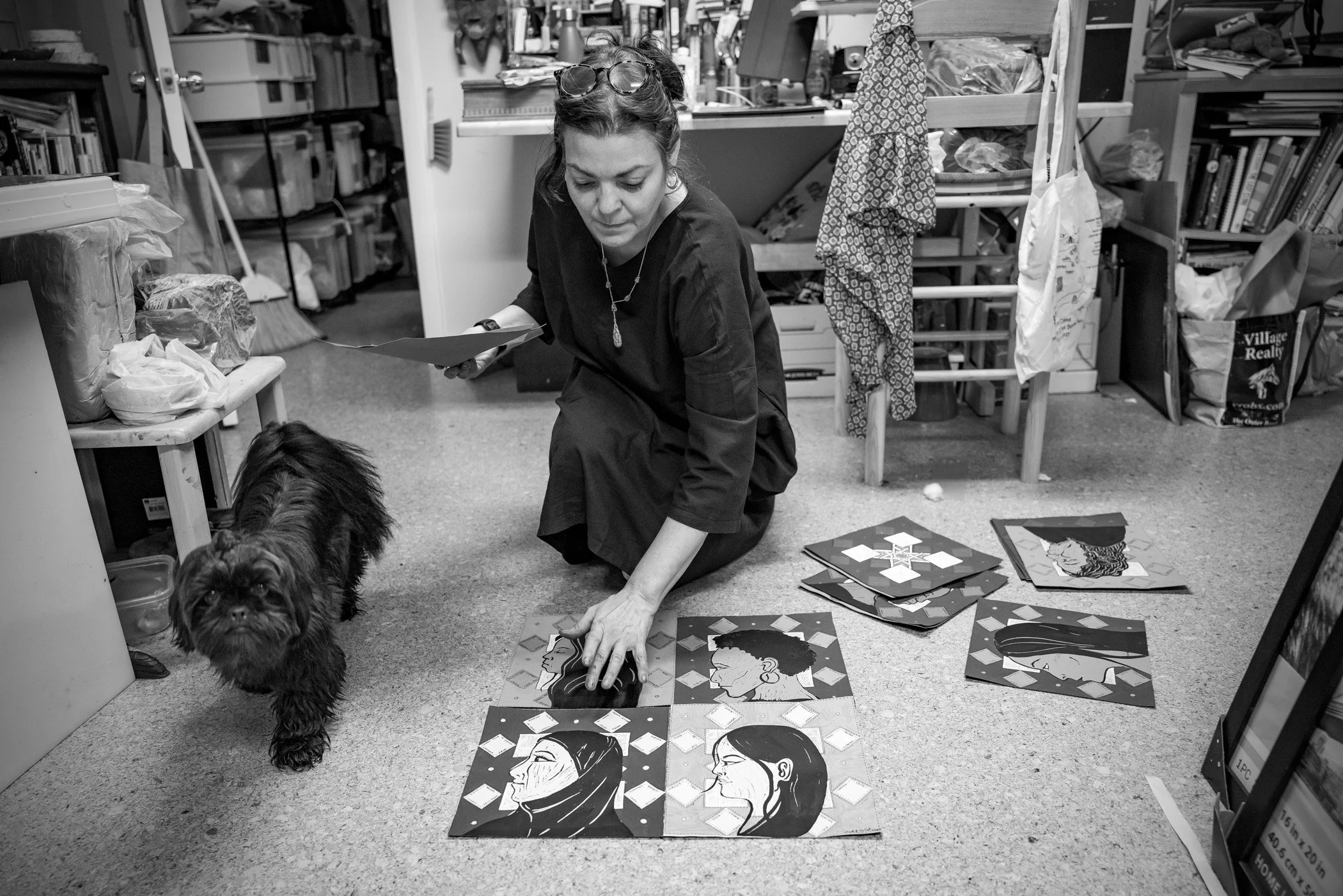
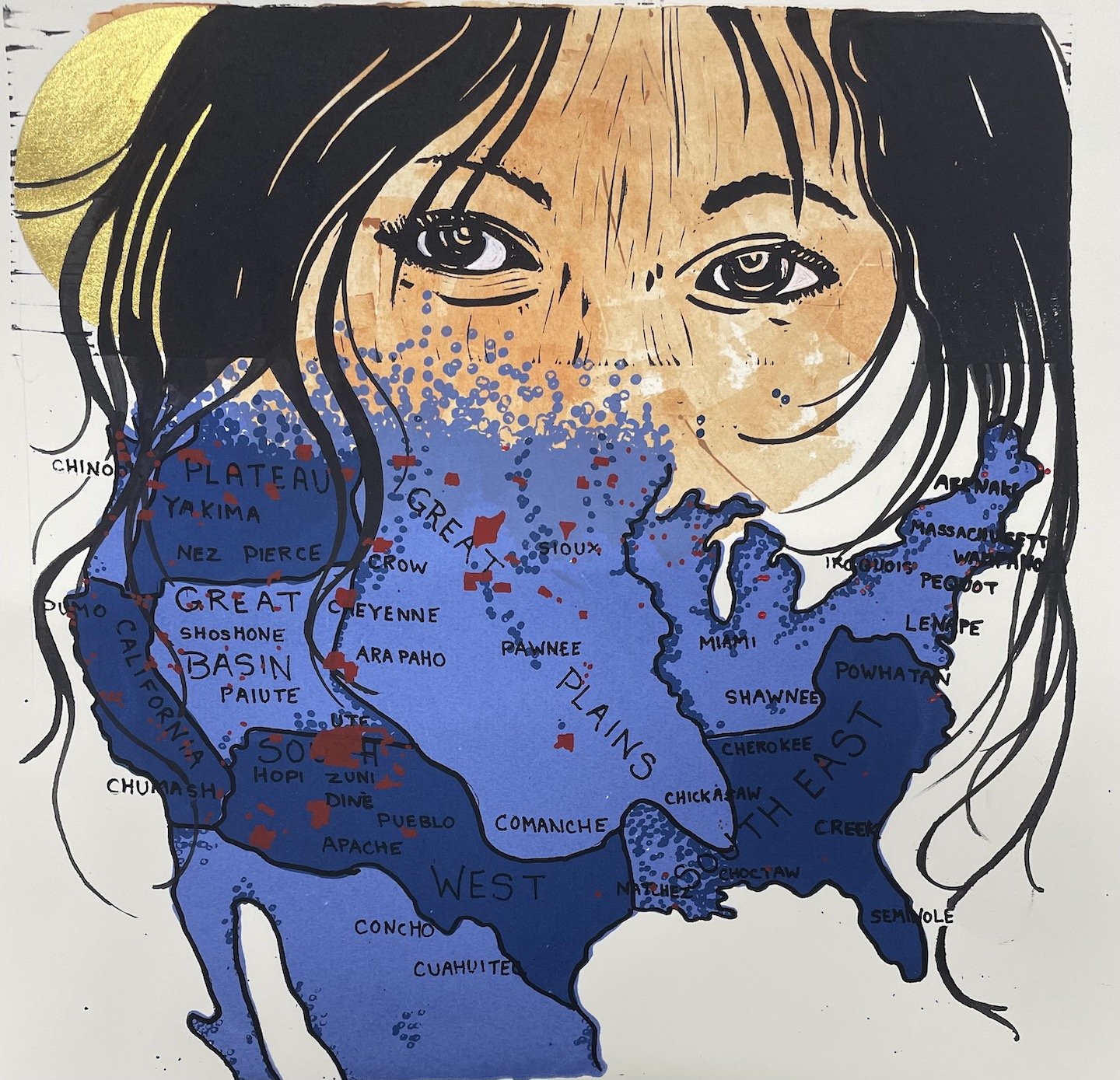
This is a series of work I am focusing on around awareness of indigenous women and children. The work is entitled Here’s Audacity, audacity in both its meanings:
1. A willingness to take bold risks, as in the fearless and daring Native women who have gone largely unrecognized.
2. Rude, disrespectful behavior, unmitigated effrontery, as in how the U.S. has continually treated Native residents.
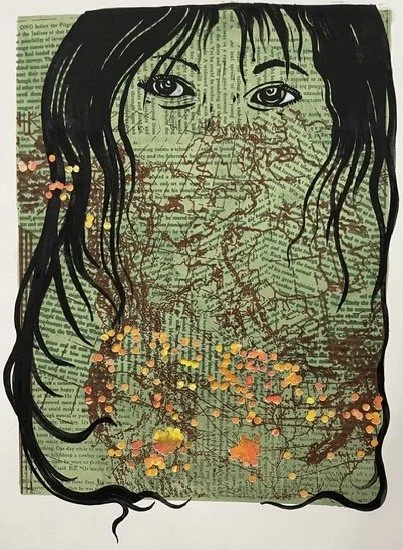
For the last two years I have been working on a body of work which seeks to look at stories told and stories omitted, while heightening awareness around Native history, the atrocities and the amazing leaders and role models. My work on paper is a combination of block printing on layers of silkscreen, and hand painted details. The background silkscreen is made up of a collage of pages from the book Here’s Audacity, from which I took my title, written by Frank Shay and illustrated by my grandfather, Eben Given Sr. The book is a collection of short stories about legendary men. I chose this as my background to represent the stories we repeatedly hear…and overlayed them with images of remarkable Native women, who are largely unknown or recognized because they are women and because they are Native.
Each print has a piece cut out, with a hand painted paper of brilliant color showing through. The hole represents both the holes in our history, whose stories get told and whose are omitted. And, on a more positive note, a space, an opening for new energies and new stories to come through.
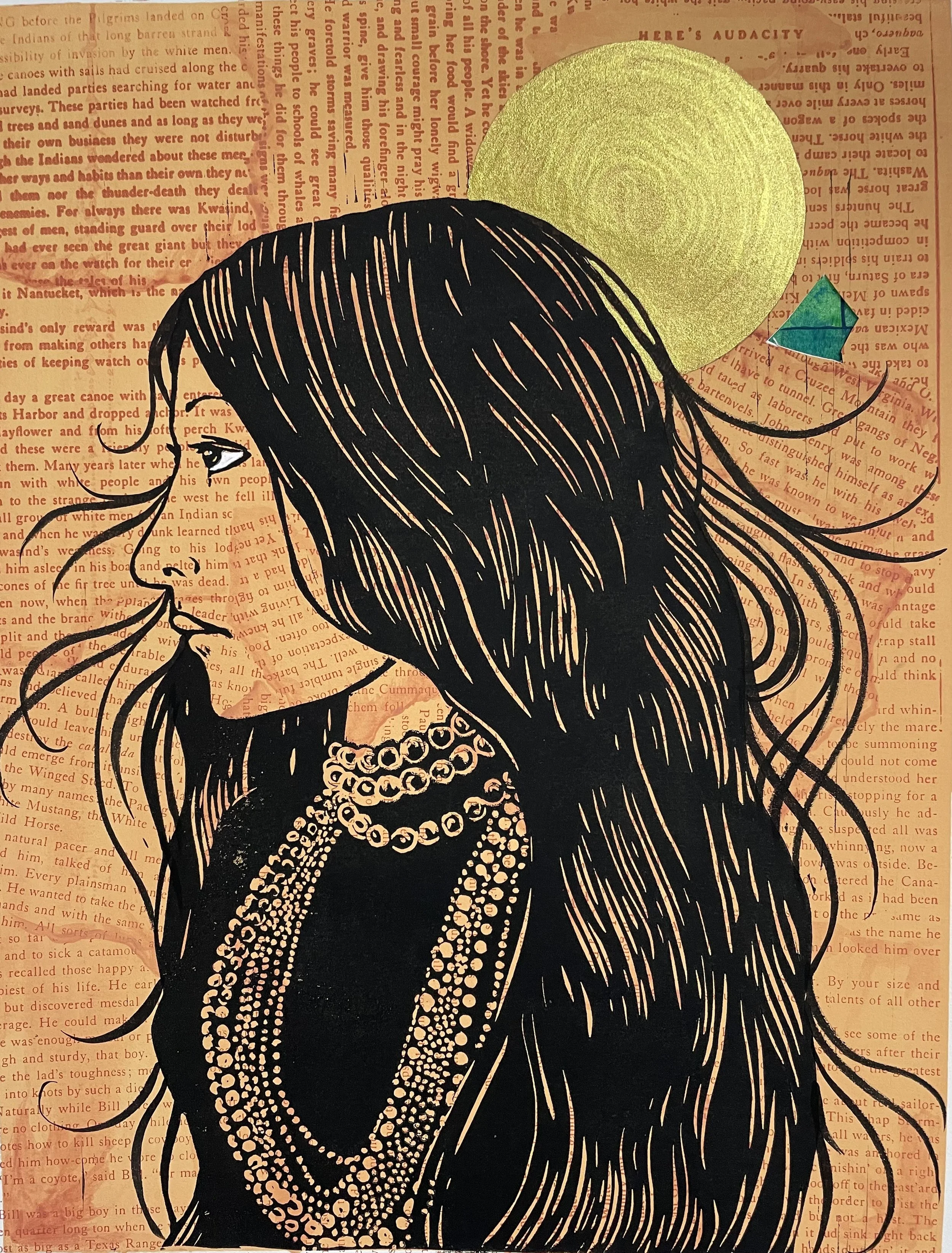
Portraits of Audacious Indigenous Women
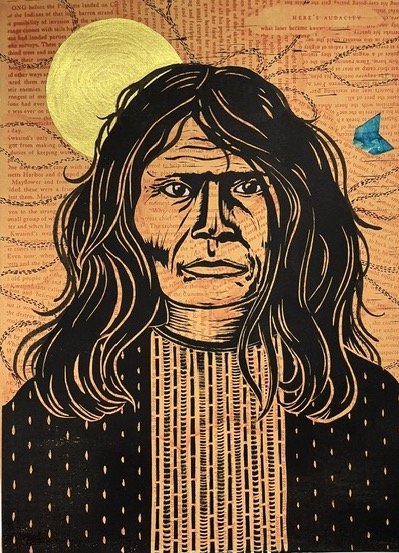
Lozen
(c. 1840 – June 17, 1889)
Chiricahua Apache.
Based in the Southern Plains and Southwestern United States, the Chiricahua (Tsokanende) are related to other Apache groups: Ndendahe (Mogollon, Carrizaleño), Tchihende (Mimbreño), Sehende (Mescalero), Lipan, Salinero, Plains, and Western Apache. Chiricahua historically shared a common area, language, customs, and intertwined family relations with their fellow Apaches. At the time of European contact, they had a territory of 15 million acres (61,000 km2) in Southwestern New Mexico and Southeastern Arizona in the United States and in Northern Sonora and Chihuahua in Mexico.
Lozen was a warrior and prophet of the Chihenne Chiricahua Apache. She was the sister of Victorio, a prominent chief. Born into the Chihenne band during the 1840s, Lozen was, according to legends, able to use her powers in battle to learn the movements of the enemy. According to James Kaywaykla, Victorio introduced her to Nana, a warrior and chief of the Chihenne band. "Lozen is my right hand ... strong as a man, braver than most, and cunning in strategy. Lozen is a shield to her people".
Zitkála -Sá
Zitkala-Ša, also Zitkála-Šá (Lakota: Zitkála-Šá, meaning Red Bird;
February 22, 1876 – January 26, 1938),
Yankton Dakota
The Eastern and Western Dakota are two of the three groupings belonging to the Sioux nation (also called Dakota in a broad sense), the third being the Lakota (Thítȟuŋwaŋ or Teton). The three groupings speak dialects that are still relatively mutually intelligible. This is referred to as a common language, Dakota-Lakota, or Sioux.
She was a writer, editor, translator, musician, educator, and political activist. She wrote several works chronicling her struggles with cultural identity, and the pull between the majority culture in which she was educated, and the Dakota culture into which she was born and raised. Her later books were among the first works to bring traditional Native American stories to a widespread white English-speaking readership. She was co-founder of the National Council of American Indians in 1926, which was established to lobby for Native people's right to United States citizenship and other civil rights they had long been denied. Zitkala-Ša served as the council's president until her death in 1938. Zitkala-Ša has been noted as one of the most influential Native American activists of the 20th century. Working with American musician William F. Hanson, Zitkala-Ša wrote the libretto and songs for The Sun Dance Opera (1913), the first American Indian opera. It was composed in romantic musical style, and based on Sioux and Ute cultural themes.
Susan La Flesche Picotte
June 17, 1865 – September 18, 1915
Omaha Tribe
The Omaha Reservation (Omaha–Ponca: Umoⁿhoⁿ tóⁿde ukʰéthiⁿ) of the federally recognized Omaha tribe is located mostly in Thurston County, Nebraska, with sections in neighboring Cuming and Burtcounties, in addition to Monona County in Iowa. As of the 2020 federal census, the reservation population was 4,526. The tribal seat of government is in Macy. The villages of Rosalie, Pender and Walthillare located within reservation boundaries, as is the northernmost part of Bancroft. Due to land sales in the area since the reservation was established, Pender has disputed tribal jurisdiction over it, to which the Supreme Court ruled unanimously in 2016 that "the disputed land is within the reservation’s boundaries."
She was a medical doctor, reformer and member of the Omaha tribe. She is widely acknowledged as one of the first Indigenous people, and the first Indigenous woman, to earn a medical degree. She campaigned for public health and for the formal, legal allotment of land to members of the Omaha tribe.
Picotte was an active social reformer as well as a physician. She worked to discourage the consumption of alcohol on the reservation where she worked as the physician, as part of the temperance movement. Picotte also campaigned for the prevention and treatment of tuberculosis, which then had no cure, as part of a public health campaign. She also worked to help other Omaha navigate the bureaucracy of the Office of Indian Affairs and receive the money owed to them for the sale of their land.
Maria Tallchief
January 24, 1925 – April 11, 2013
Osage Tribe
Osage (/oʊˈseɪdʒ, ˈoʊseɪdʒ/; Osage: 𐓏𐒰𐓓𐒰𐓓𐒷 𐒻𐒷 Wažáže ie) is a Siouan language that is spoken by the Osage people of the U.S. state of Oklahoma. Their original territory was in present-day Missouriand Kansas but they were gradually pushed west by European-American pressure and treaties.
Maria Tallchief was America's first major prima ballerina. Together with choreographer George Balanchine, she is widely considered to have revolutionized American ballet.
She is credited with "[breaking] down ethnic barriers" and was among the first Americans to flourish in a field long dominated by Russians and Europeans. Reflecting on her own career, Tallchief wrote "I was in the middle of magic, in the presence of genius. And thank God I knew it."
Tallchief was considered America's first major prima ballerina and was the first Native American to hold the rank. She remained closely tied to her Osage history until her death, speaking out against stereotypes and misconceptions about Native Americans on many occasions. Tallchief was involved with America for Indian Opportunity and was a director of the Indian Council Fire Achievement Award. She and her sister Marjorie were two of five Native American ballet dancers from Oklahoma born in the 1920s. However, she wished to be judged on the merits of her dance alone. "Above all, I wanted to be appreciated as a prima ballerina who happened to be a Native American, never as someone who was an American Indian ballerina,"
Helen Vanderhoop Manning
Sept 4, 1919-January 5, 2008
Aquinnah Wompanoag Tribe
Aquinnah Martha’s Vineyard, MA
Historian, writer, educator, tribal leader
Education director for the Wôpanâak Tribe.
Worked on creation of Oral History Project,
She fought for federal recognition for her tribe, achieved 1987, Founded the Wôpanâak Language Reclamation
Authored: Moshups’s Footsteps: The Wompanoag Nation, Gay Head/Aquinnah: the People of the First Light
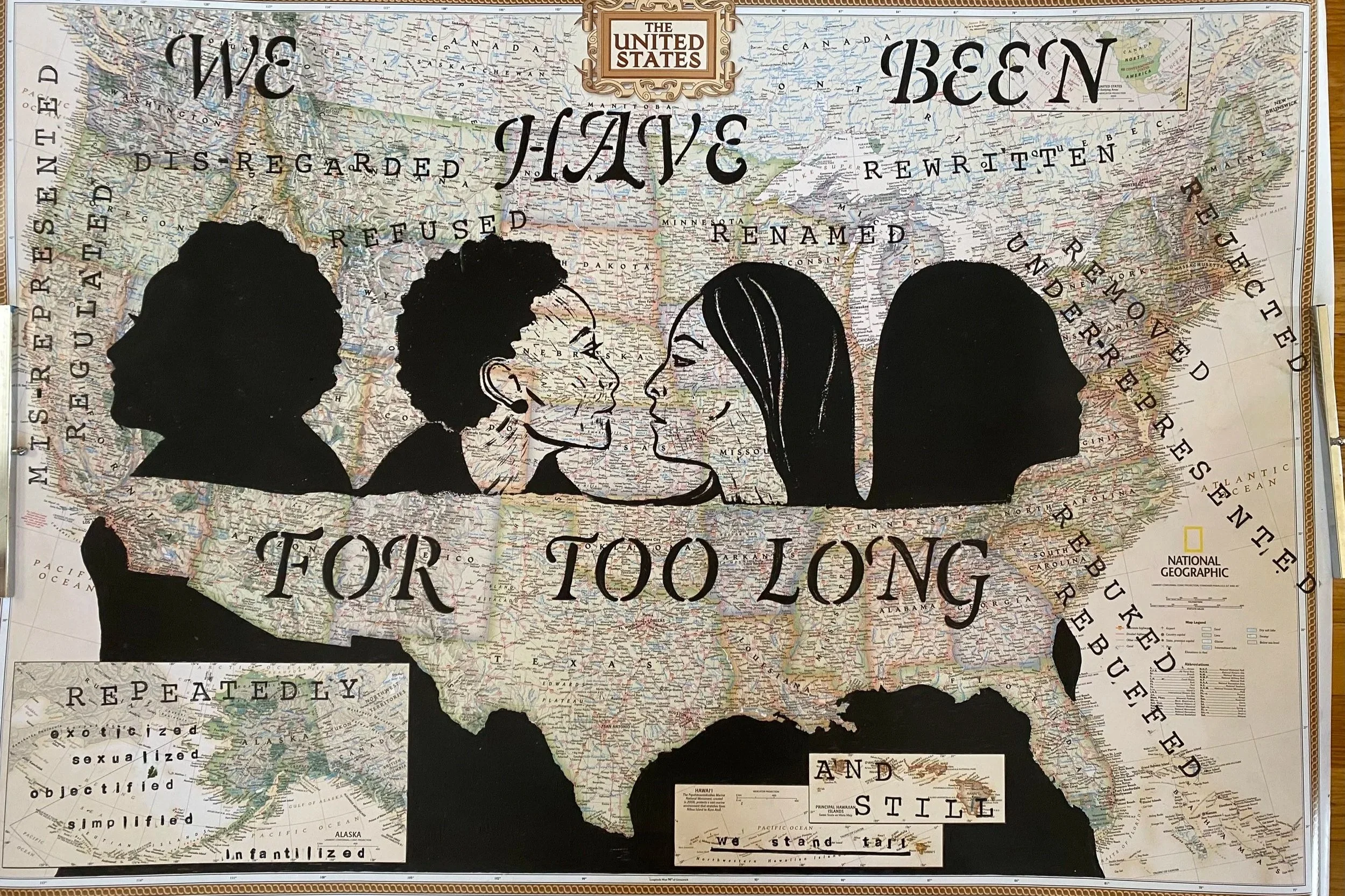
And Still We Stand Tall
This print was created in 2020-21 in reaction to so many things but mainly to how Native and African American women have historically and sadly, to a certain point, continually been treated. And yet we stand tall and strong.
I was honored that this print was chosen to be included in the 2024 NA Biennial Printmakers Show. It also received an award which helped me discover and become a member of The Shepherd and Maudsleigh Printmakers Studio
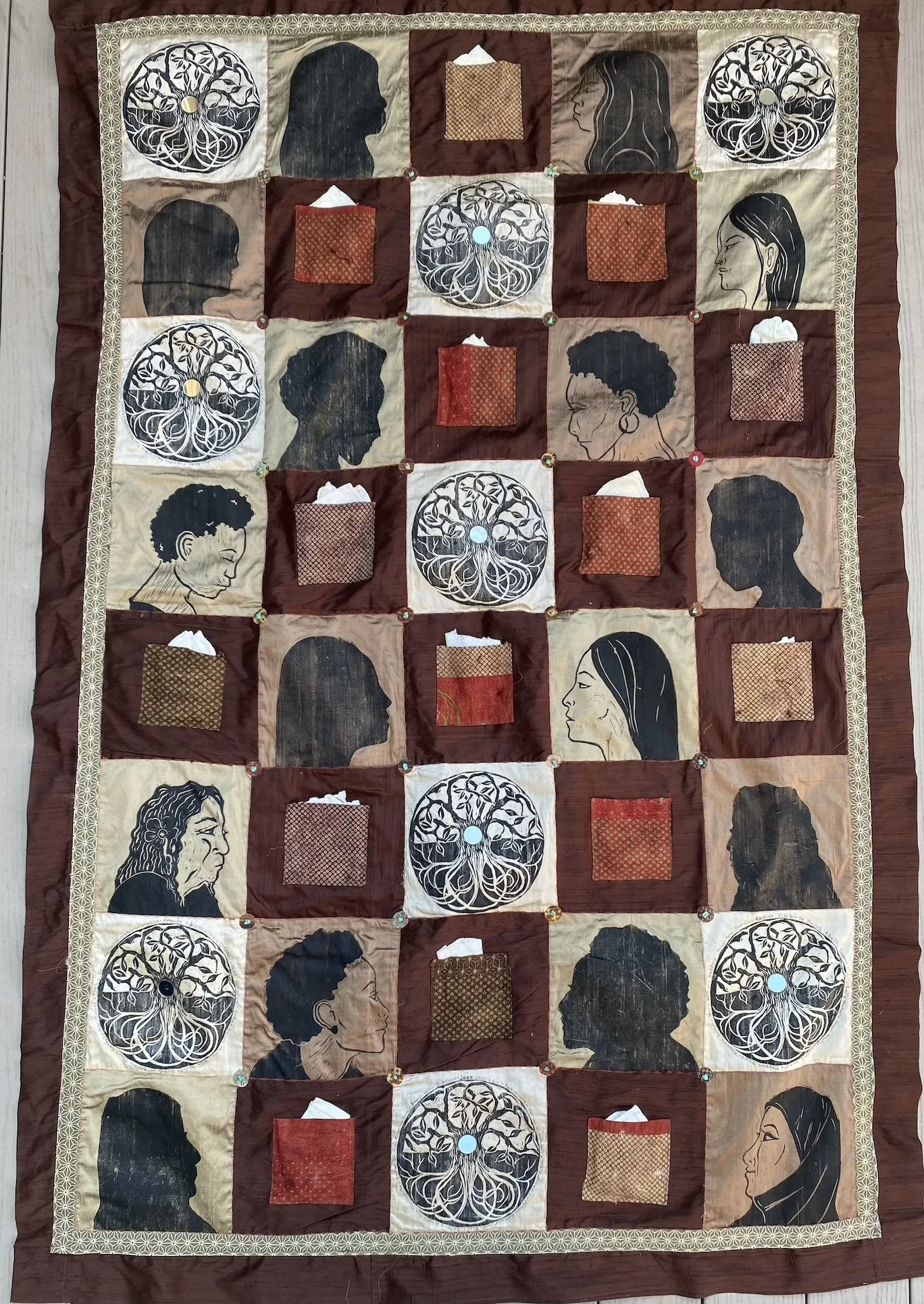
BIPOC Women Quilt
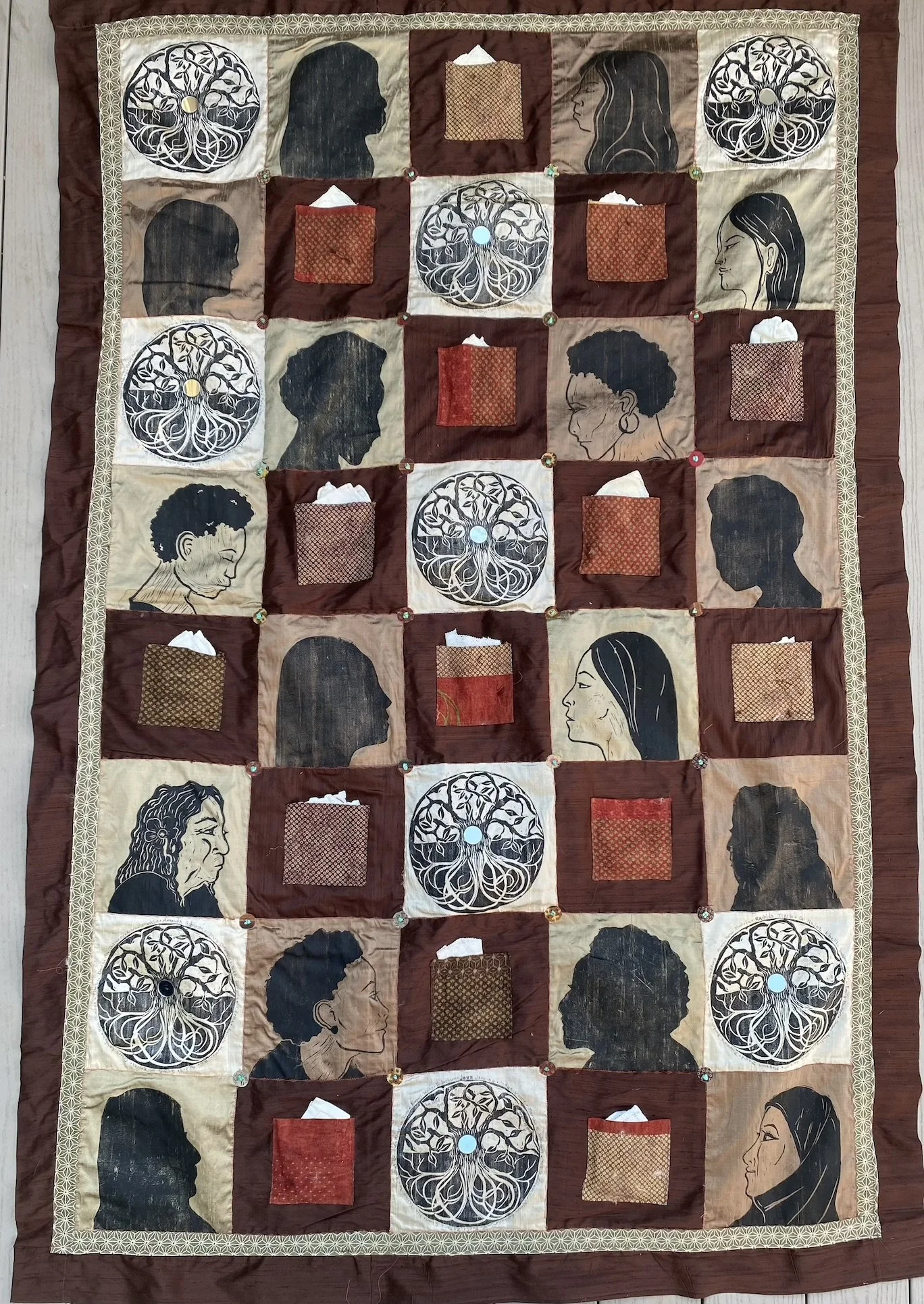
Remembering &Honoring
In the pockets, handwritten on antique handkerchiefs are the names of BIPOC and Transwomen I wish to honor and remember. They are the names of women who lost their lives too soon AND the names of women who were great leaders, role models & changemakers.
Mourners
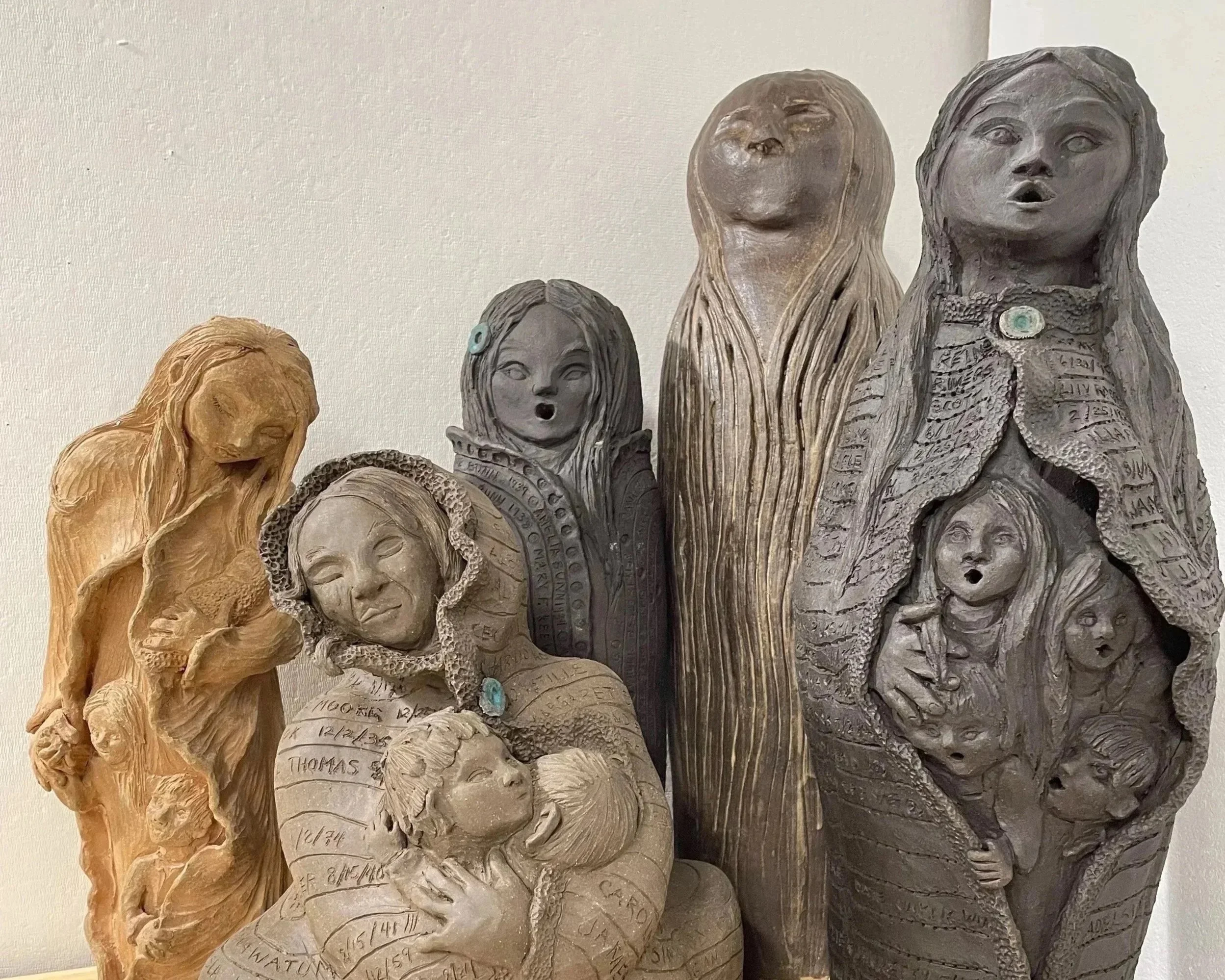
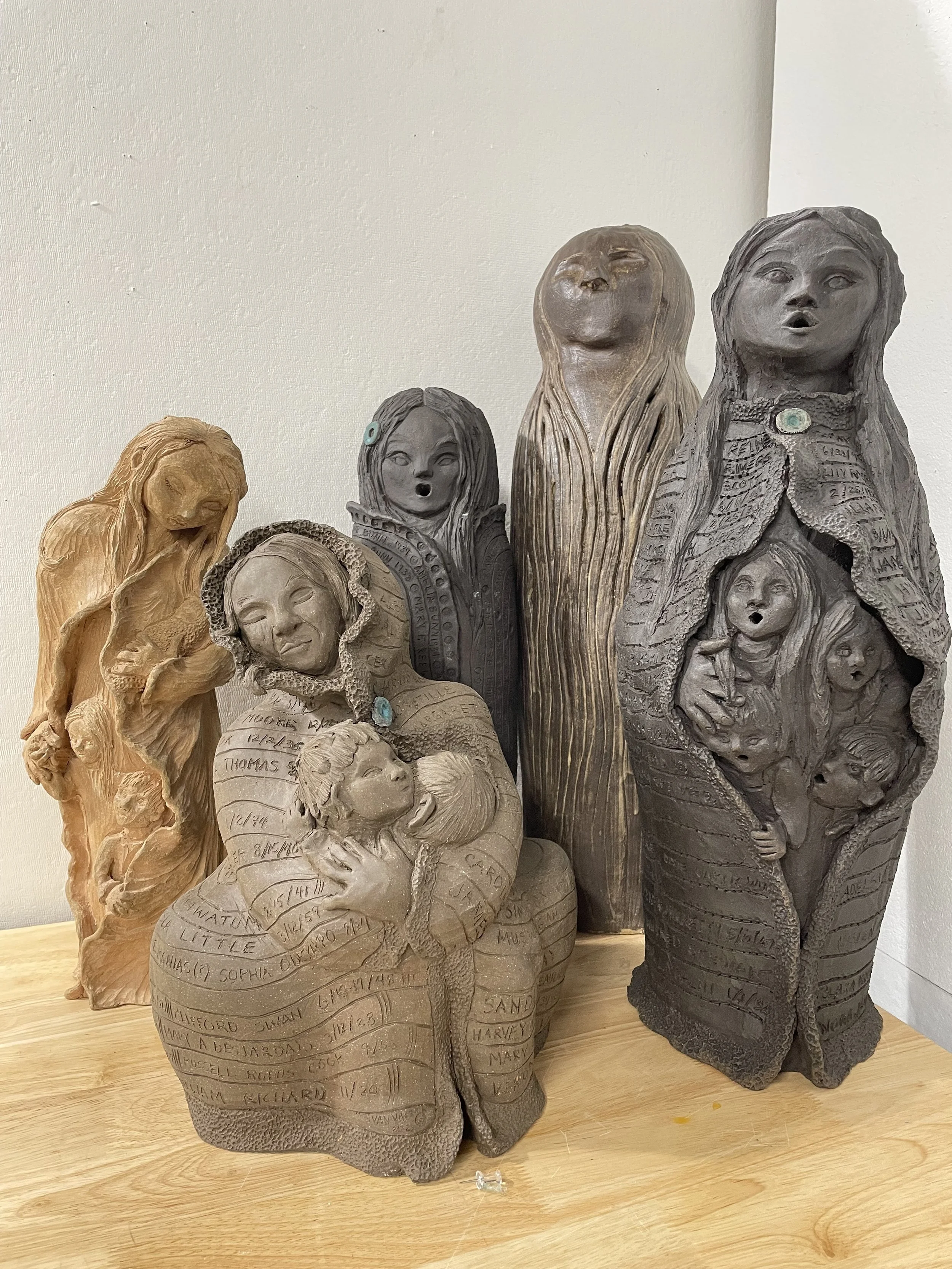
Indigenous Families Mourning the children lost to them through the North American Residential Schools
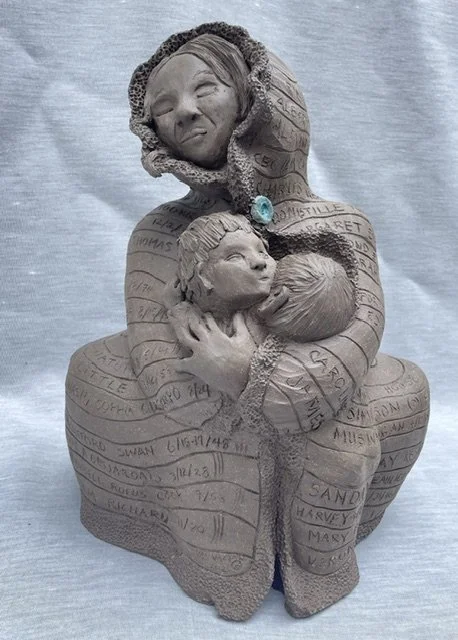
The inscribed names are from the list of names provided by Canada of the children who died at Canadian Residential Schools
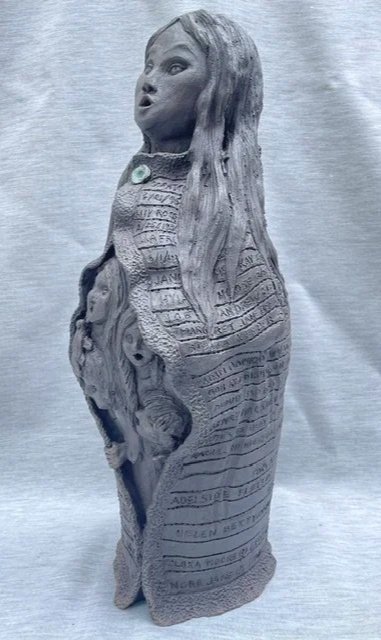
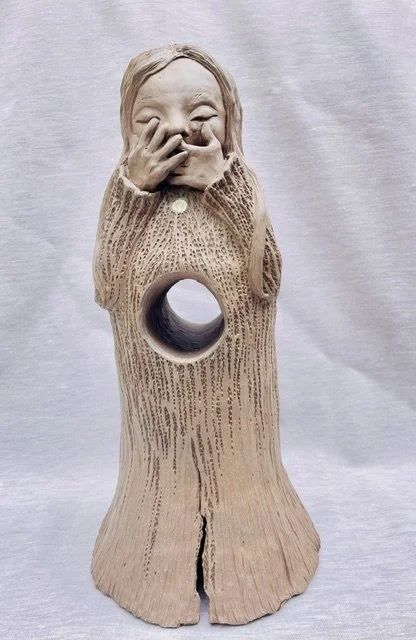
• This is the beginning of a series around the U.S. Residential Schools which I hope to bring awareness to the public addressing this issue through art. Indigenous children were forced to go to these schools, "to kill the Indian, save the man." These schools ran from 1860 up until the last one closed in 1978. Children were forced to abandon their language, beliefs, heritage and culture.
their hair was chopped, their traditional clothing burned. It was a place where many endured physical, sexual and mental abuse And it wasn't that long ago.
The ceramic figures are coil built. The names of the children who died in Canadian Residential Schools are engraved into the cloaks.
I have also created prints to show the extent of Residential Schools in the U.S.A.

Start Your Project
Tell us what you’re dreaming of and we’ll reach out to craft something special together.